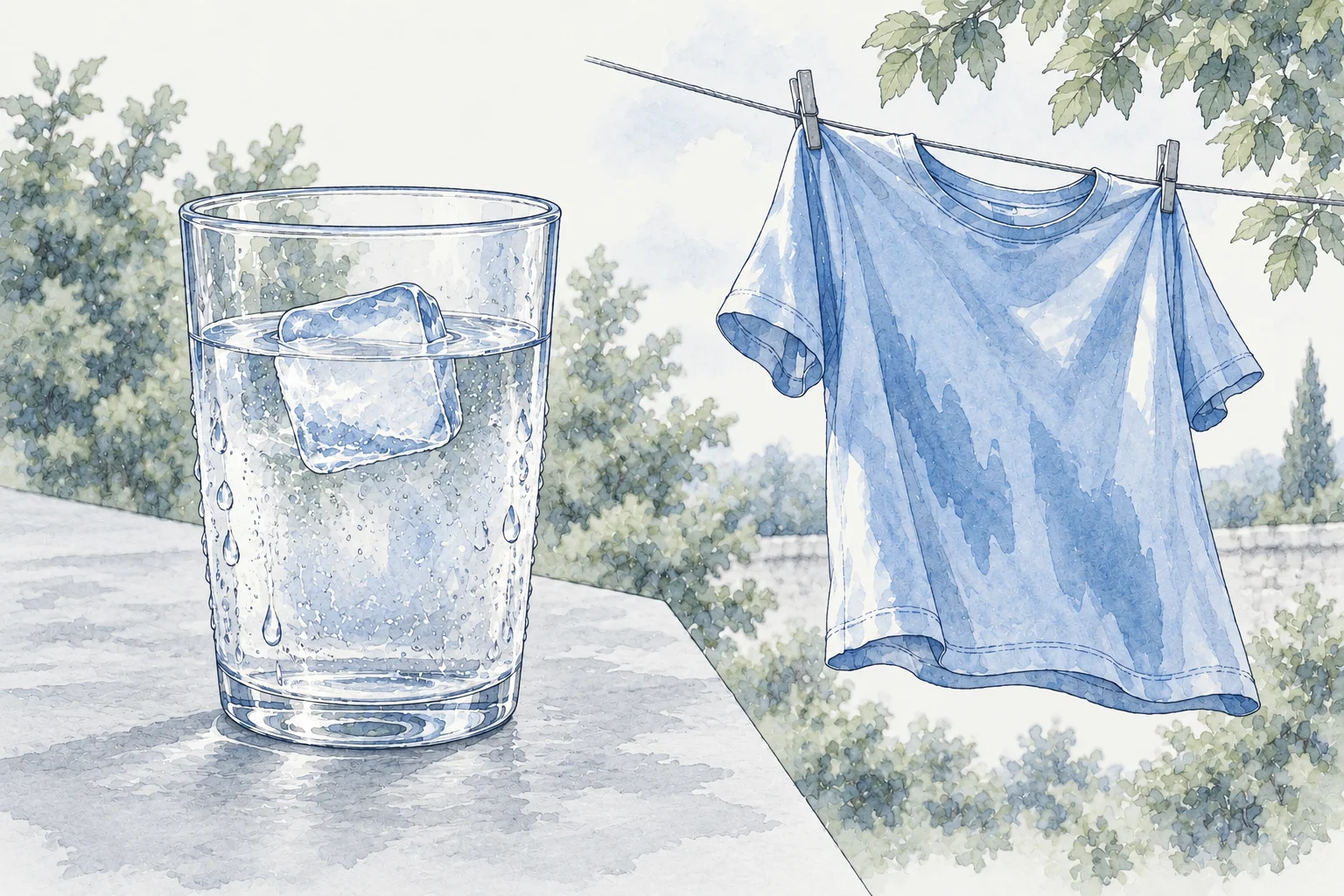
Solids, liquids and gases explained by how their particles are arranged and how they move.
Modules
Module 1 · syllabus 1.1 · 3 parts
States and changes of state
Why does ice melt but stay water?
Predict what the thermometer will do, then heat one block of ice until it melts and boils away. Read the thermometer every 30 s, plot your own heating curve, and watch the same molecules change their arrangement.
Same water, three statesProperties and particles of solids, liquids and gases
Where does the heat go?Melting, boiling, evaporating and the heating curve
Cooling it back downCondensing, freezing and the cooling curve
Syllabus statements for this topic · for teachers · 8 statements
Core for every pupil · Supplement also for Extended entry. Paraphrased from the Cambridge IGCSE Chemistry 0620 syllabus (2026–2028); check the official syllabus for exact wording.
1.1 Solids, liquids and gases
Covered in States and changes of state, Gases under pressure