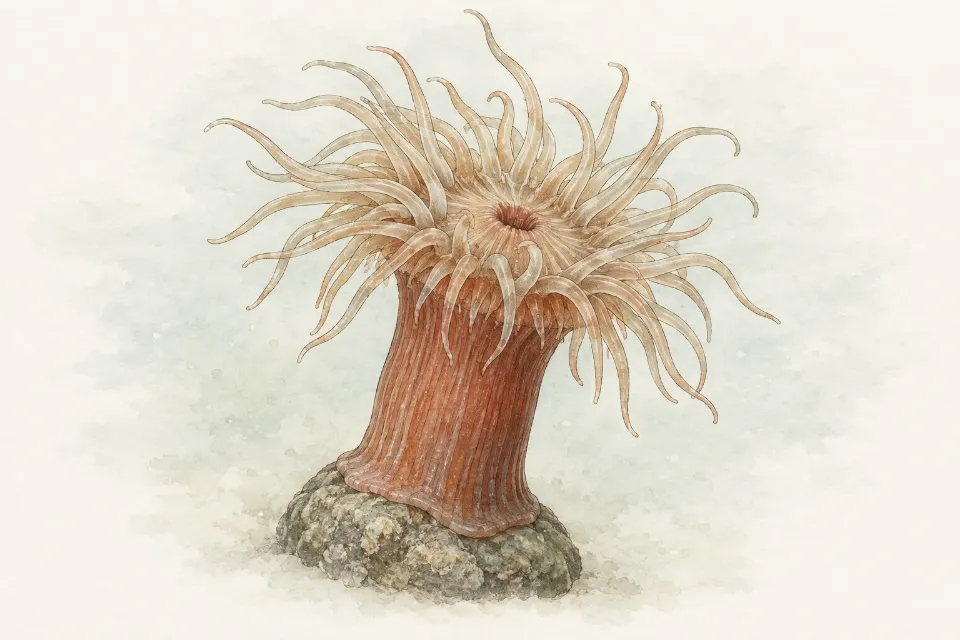
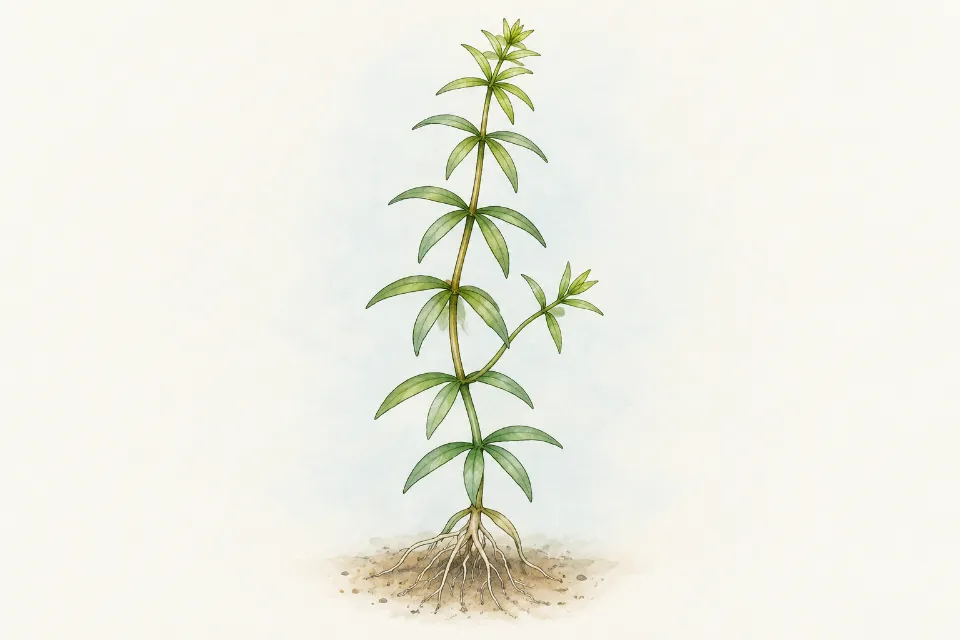
At low tide, a rock pool on the shore holds a strange thing. It is fixed to a rock: a short soft column with a ring of tentacles round the top, spread out like the petals of a flower. It stays on the same rock for weeks. In a garden pond, a green sprig of pondweed drifts in the water. Which of the two is a plant? The first one is called a sea anemone, and an anemone is also the name of a flower. But biologists do not decide by looks or by names. They look for a few features that every member of a group shares.
Two kingdoms
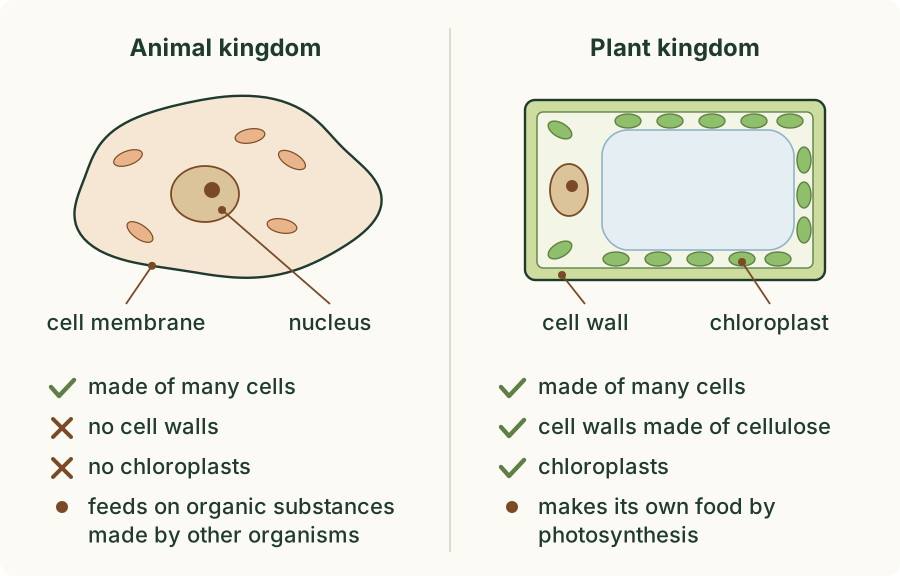
The largest groups of living organisms are called kingdoms. Two of them you know already: the animal kingdom and the plant kingdom. Four features place an organism in one or the other. In the table, organic substances are the substances living things are made of, such as carbohydrates, proteins and fats.
| Feature | Animals | Plants |
|---|---|---|
| Made of many cells | yes | yes |
| Cell walls | none | yes, made of cellulose |
| Chloroplasts | none | yes |
| How they get their food | feed on organic substances made by other living things | make their own food by photosynthesis |
A plant makes its own organic substances: the chloroplasts in its cells absorb light, and the plant uses the energy to make sugars from carbon dioxide and water. This is photosynthesis. An animal has no chloroplasts, so it cannot make its food. It must eat other organisms, or parts of them, and digest them. Plant cells also have a cell wall made of cellulose around each cell membrane; animal cells have a membrane only. Both kinds of cell have a nucleus, which holds the cell's genetic material.
 (enlarge)
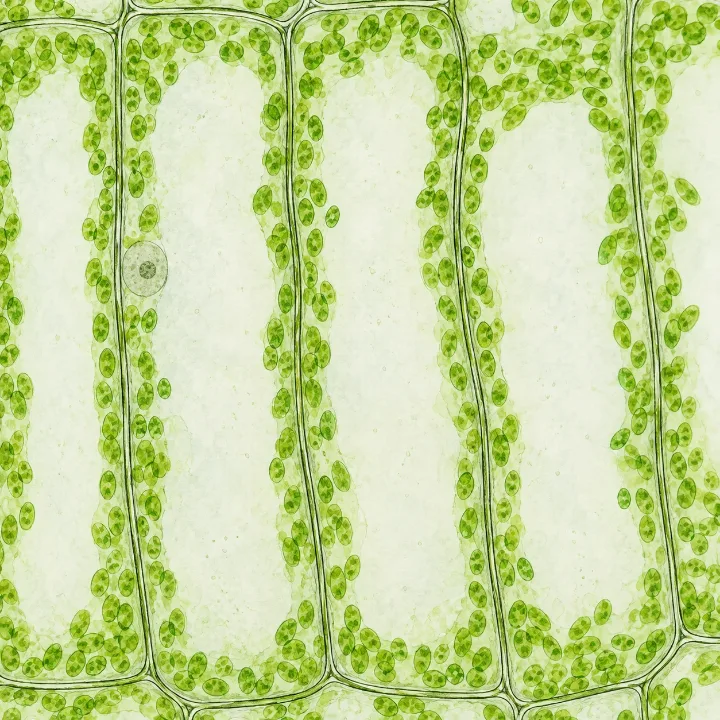
Now go back to the rock pool and the pond. Under the microscope, the cells of the sea anemone have a membrane but no cell wall, and no chloroplasts. The anemone catches small animals with its stinging tentacles, pulls them into its mouth and digests them inside its body: it feeds on organic substances made by other organisms. So the sea anemone is an animal, however much it looks like a flower. The pondweed is the opposite. Each of its cells has a wall and many green chloroplasts, and in the light it makes its own food by photosynthesis: you can see bubbles of oxygen rising from its leaves. It is a plant.
 (enlarge)
Trap: "It stays in one place, so it must be a plant." Many animals stay fixed to one spot for most of their lives, like the sea anemone. Moving about is not a kingdom feature. Look for cell walls, chloroplasts and how the organism gets its food.
Animals with a backbone
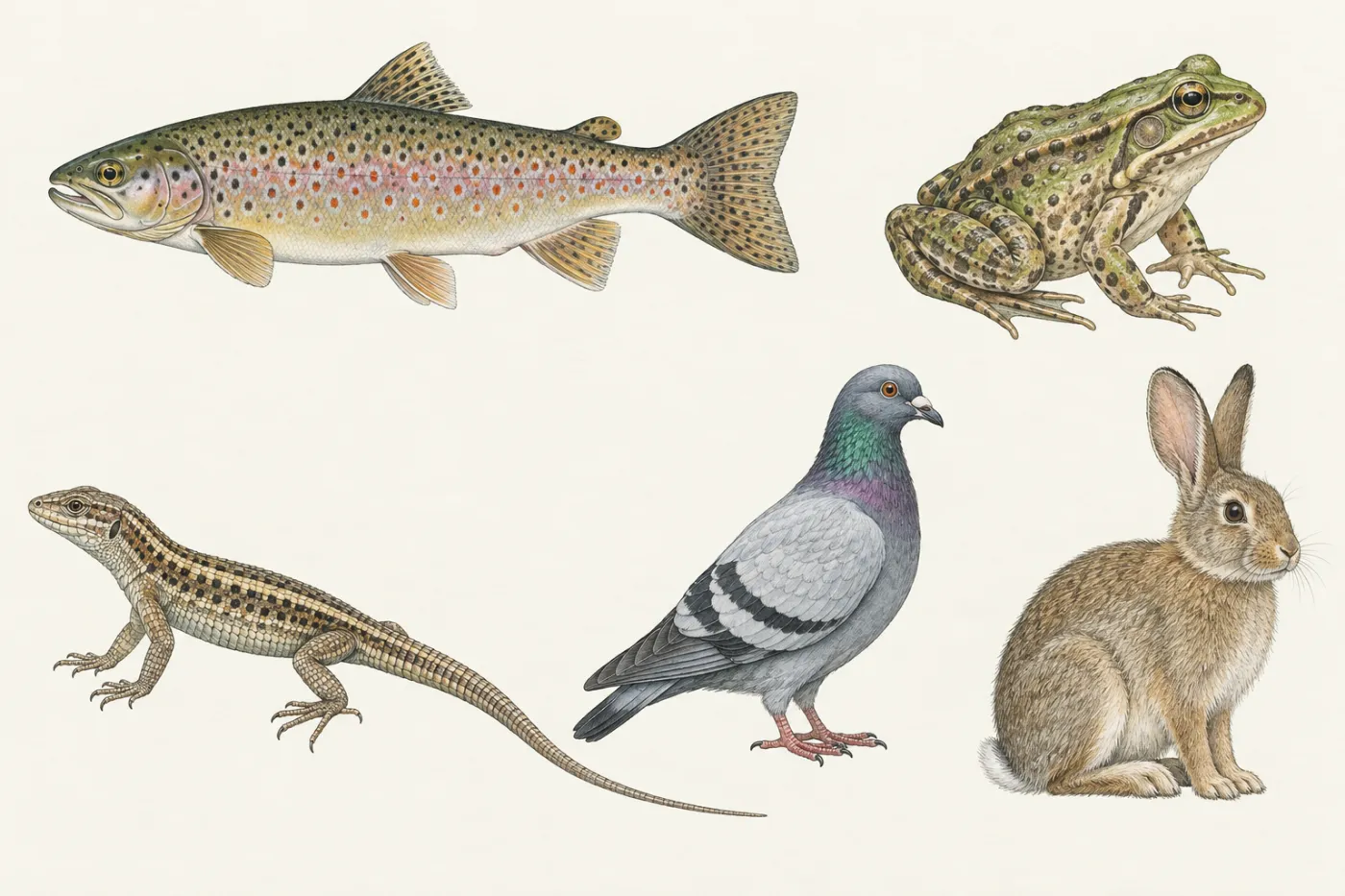
The animal kingdom is huge, so biologists split it into smaller groups. One of them is the vertebrates: animals with a backbone. The vertebrates are placed in five groups: mammals, birds, reptiles, amphibians and fish.
 (enlarge)
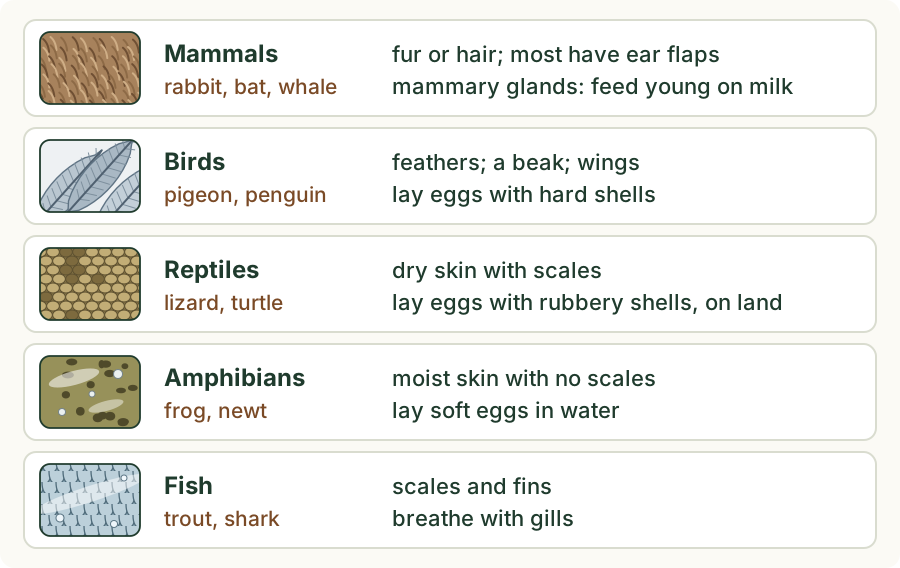
Most of the features that place a vertebrate in its group are on the outside, so you can check them by looking: what covers the skin, and what the animal has on its head and body. A few are about how the animal reproduces.
- Mammals have fur or hair, and females have mammary glands, which make milk, so mammals feed their young on milk. These two features decide the group. Most mammals also have ear flaps (pinnae) on the outside of the head, but some, such as whales, do not. Fur is usually the feature you can see first.
- Birds have feathers, a beak and wings. They lay eggs with hard shells.
- Reptiles have dry skin with scales. Most lay eggs with rubbery shells, on land.
- Amphibians have moist skin with no scales. They lay soft eggs in water, and their young (tadpoles) live in water.
- Fish have scales and fins, and they breathe with gills.
 (enlarge)
A newt and a lizard show why the skin matters. Both have a long body, four legs and a long tail, and from a distance they look alike. If you could touch them, they would feel quite different. The newt's skin is smooth and moist, with no scales: it is an amphibian, and it lays its soft eggs in a pond. The lizard's skin is dry and covered in rows of small scales: it is a reptile.
Features, not way of life
The hardest animals to place are the ones that live like members of another group. A penguin cannot fly: it swims, and its wings are stiff flippers. A bat flies at night on wings of skin. A whale lives its whole life in the sea and swims with its tail and flippers. Classify each one by its features, not by where it lives or how it moves.
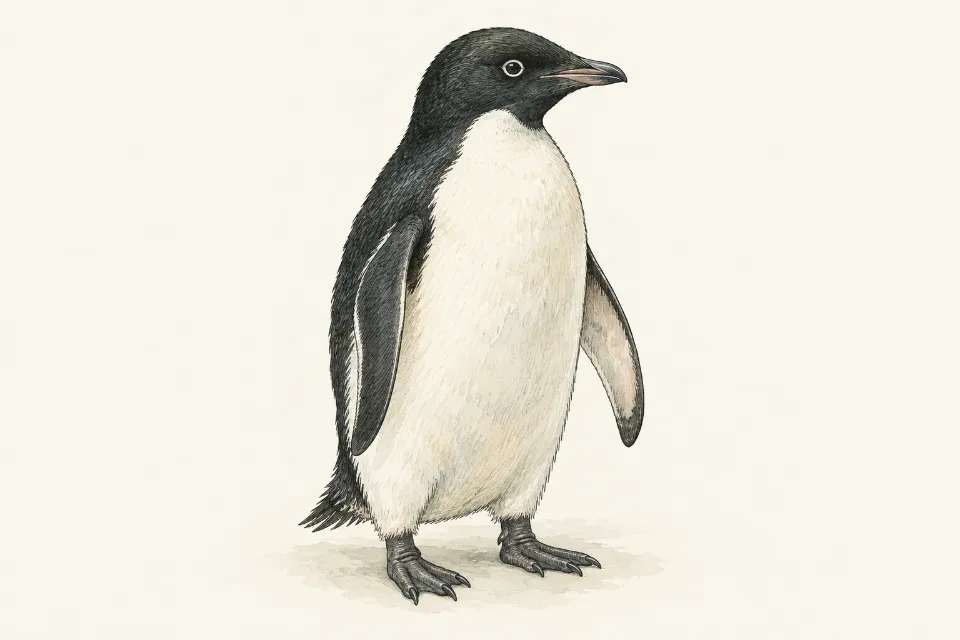
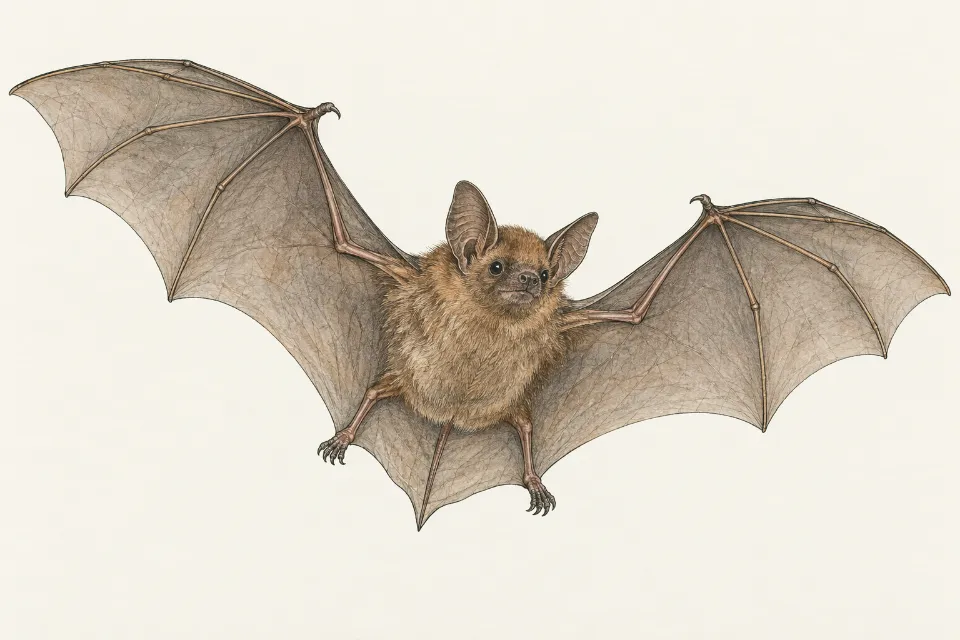
Take them one at a time. The penguin is covered in feathers, it has a beak, its flippers are wings, and it lays eggs with hard shells: it is a bird. The bat has fur and ear flaps, and a mother bat feeds her baby on milk: it is a mammal, even though it flies. The whale has no scales and no gills; it comes to the surface to breathe air, and a mother whale feeds her calf on milk from her mammary glands: it is a mammal, not a fish.
Trap: "A bat has wings, so it is a bird; a penguin cannot fly, so it is not." Flying is not a bird feature: feathers, a beak, wings and eggs with hard shells are. The penguin has all of them. The bat has fur and feeds its young on milk, so it is a mammal.
Trap: "A whale is a fish, because it lives in water and has fins." A whale has no scales and no gills, and it feeds its young on milk. Where an animal lives is not a group feature.
Not every animal has a backbone. The sea anemone has none, and nor do beetles, spiders, crabs and centipedes; part 2 sorts many of these into groups of their own. There are other groups of animals too, which you do not need here.
Now sort some organisms yourself. In the experiment, the cards come out of the box one at a time: first the sea anemone and the pondweed, then five vertebrates. For each card you can make a first guess; then look closer, through the hand lens or at a microscope print, and choose the group by its features.
Key idea: Animals and plants are both made of many cells. Plants have cellulose cell walls and chloroplasts and make their own food by photosynthesis; animals have neither and feed on organic substances made by other organisms. Vertebrates are placed in five groups by their features: mammals (fur or hair, milk; most have ear flaps), birds (feathers, beak, wings, hard-shelled eggs), reptiles (dry scaly skin), amphibians (moist skin with no scales, eggs in water) and fish (scales, fins, gills).