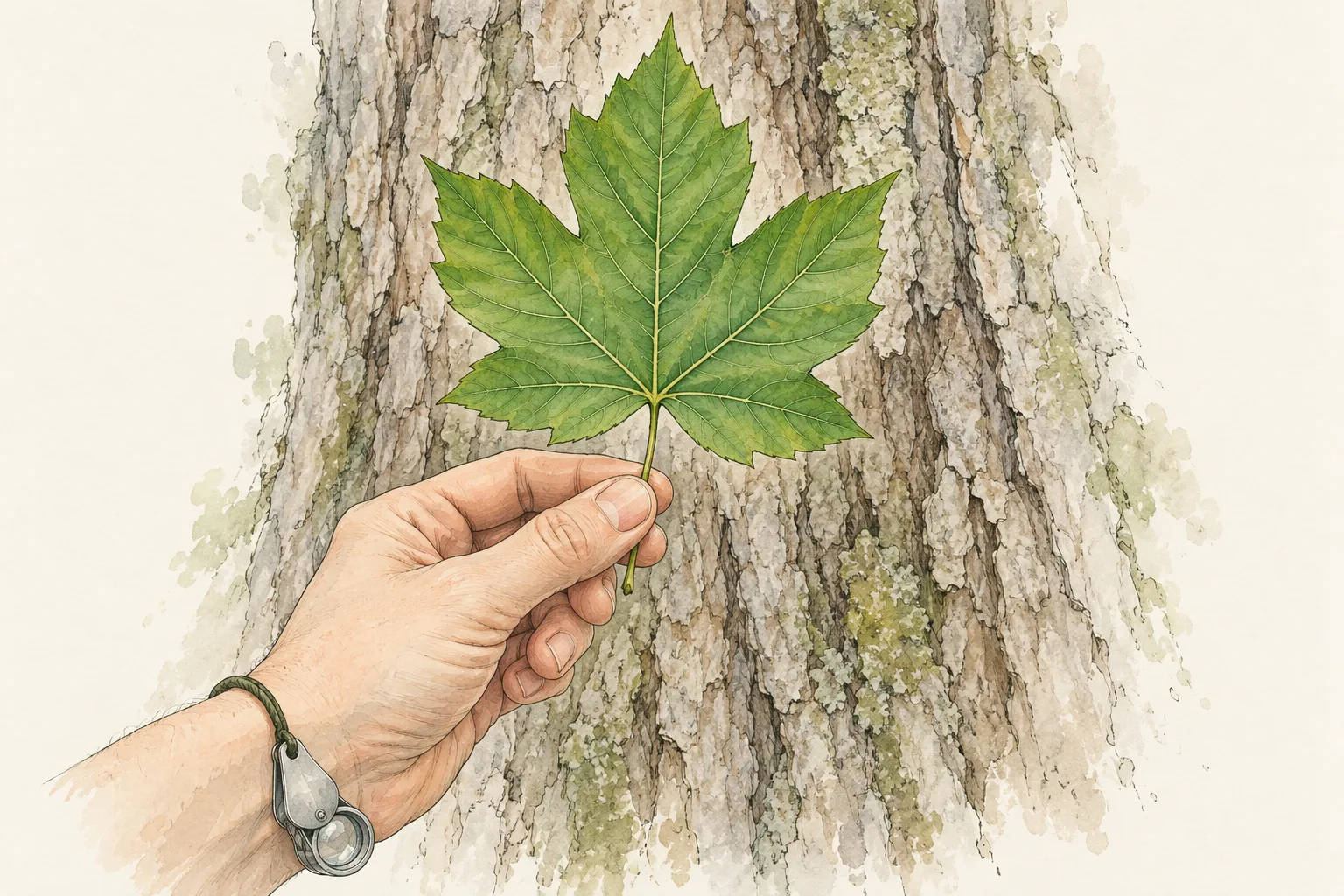
You pick up a leaf under a big tree in the park. It has five pointed lobes (parts of the leaf that stick out, like the fingers of a hand) on a long stalk. What tree is it? There is no label on the trunk and nobody to ask. A book with a photograph of every tree would be very thick, and many photographs would look alike. Biologists use a quicker tool: a short list of questions that leads you to the name, one clear feature at a time.
 (enlarge)
A key asks two-way questions
This tool is a dichotomous key. "Dichotomous" means "cutting in two": at every step the key gives you a pair of descriptions, and only one of them fits the organism in front of you. The one you choose sends you either to another pair or to a name.
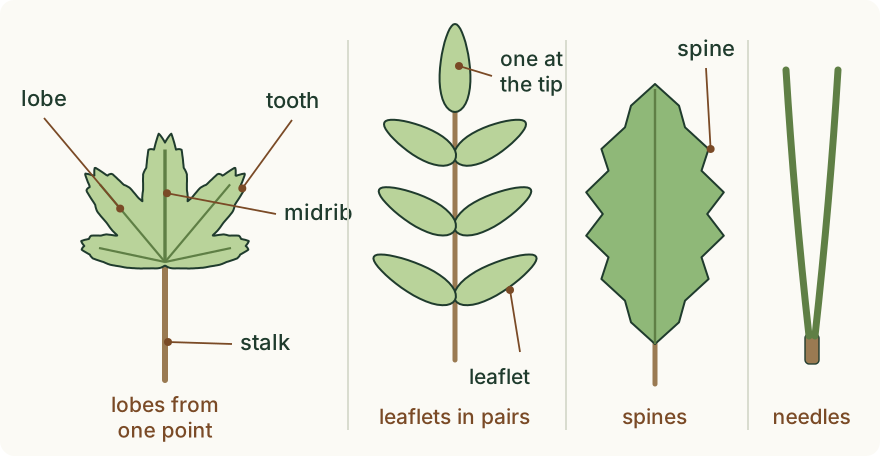
A leaf key uses a few words for the parts of a leaf. The blade is the flat part of a leaf, and the midrib is the thick vein down its middle. Some leaves are one blade; others are divided into separate small parts called leaflets. Lobes stick out from the edge of a blade, teeth are small points along an edge, and spines are sharp points. Needles are long, thin, hard leaves.
 (enlarge)
Here is a key for the leaves of six common trees, written as numbered pairs of statements:
| Pair | Statement | Go to |
|---|---|---|
| 1 | Leaf divided into separate leaflets | 2 |
| Leaf is one blade | 3 | |
| 2 | Leaflets spread from one point at the end of the stalk | horse chestnut |
| Leaflets in pairs along the stalk, with one at the tip | ash | |
| 3 | Sharp spines on the edge of the leaf | holly |
| No spines on the edge | 4 | |
| 4 | Lobes along both sides of the midrib | oak |
| Lobes spreading from one point | 5 | |
| 5 | Lobes with small teeth on the edge | sycamore |
| Lobes with a smooth edge | field maple |
To use it, start at pair 1 and read both statements before you choose. Then follow the number. Take the leaf from the park: it is one blade (go to 3), it has no spines (go to 4), its lobes spread from one point (go to 5), and the lobes have small teeth on the edge. It is a sycamore.
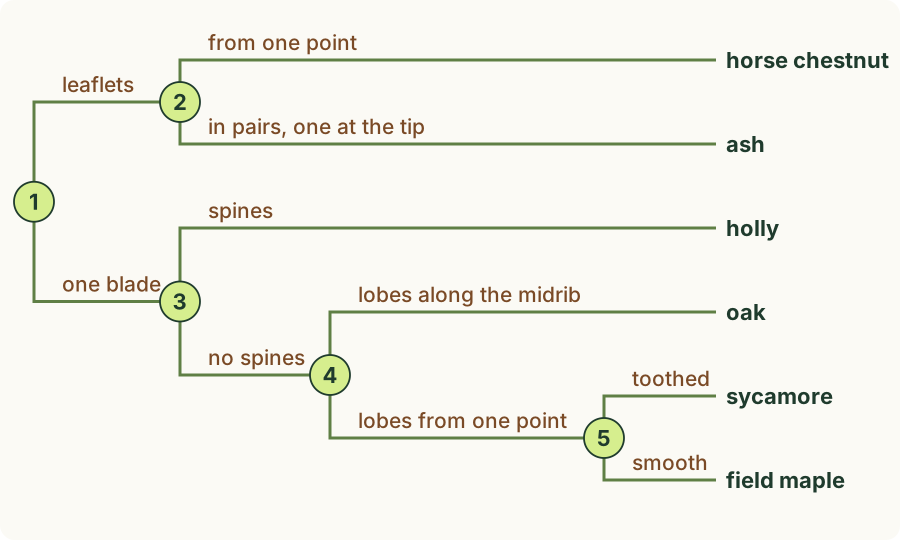
The same key can be drawn as a branching diagram. Each fork is one pair; the two branches are its two statements.
 (enlarge)
Features you can see
A key only works if two people looking at the same leaf choose the same statement. So it uses identifiable features: features you can see, count or measure, that two people describe the same way, and that are reliable for the organisms in the key. The shape of the leaf, leaflets, lobes, teeth, spines and needles are all good features. No feature is perfect: holly leaves high up on an old tree often have smooth edges with no spines. So a key is written for typical specimens, and you should use typical leaves.
Some questions are no use. "Large or small?" Large compared with what? A young leaf is smaller than an old leaf of the same tree, and two people will disagree. (A measurement, such as "longer than 10 cm", can work, but only if the leaves really differ that much.) "Green or brown?" Most leaves are green in summer, so the question does not split them, and many turn brown in autumn. And a key never asks for the name ("Is it a beech?"): the name is what you are trying to find out.
Trap: "Is it big?" makes a good step in a key. Size changes with age and is judged differently by different people. Use a feature that is either there or not, such as leaflets or spines.
Now try the key yourself, on six mystery leaves. Every tree also has a two-part scientific name, and close relatives share the first part. Before you start: which two of the six do you think share it?
Building your own key
To make a key for a group of organisms:
- Look at all of them and list features that some have and others do not.
- Choose a feature that splits the whole group into two smaller groups. Every organism must have a clear answer.
- Write it as a pair of statements that are opposites, such as "has legs" and "has no legs".
- Do the same for each smaller group, until every organism is on its own with its name.
- Test the key: run each organism through it and check that it reaches its own name.
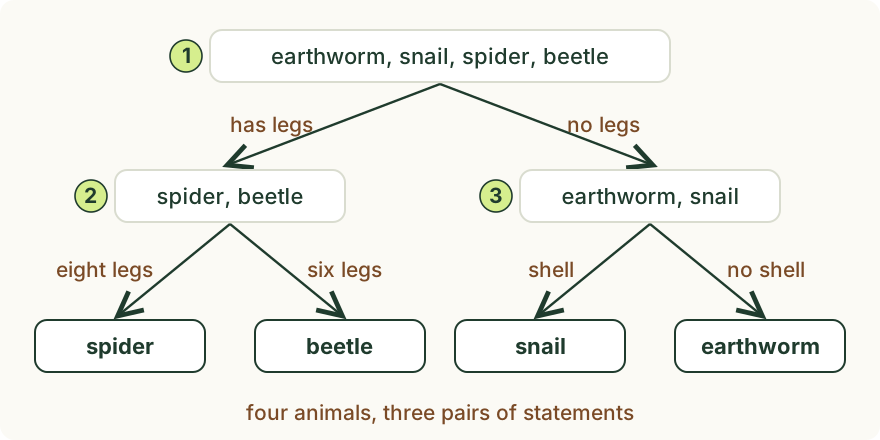
Here is a key built for four small animals found under a log: an earthworm, a snail, a spider and a beetle. "Has legs or has no legs" splits them two and two. Then "eight legs or six legs" separates the spider from the beetle, and "has a shell or has no shell" separates the snail from the earthworm.
 (enlarge)
Count the pairs: four animals needed three pairs of statements. Each pair splits one group into two, so a key for any number of organisms needs one pair fewer than the number of organisms.
Trap: "A key can have three choices at a step." A dichotomous key always has exactly two statements at each step, and they must not both fit the same organism.
A key only works for the organisms it was made for. If neither statement of a pair fits, stop: either the organism is not in the key, or this specimen is not typical (a holly leaf with no spines ends up here), so look at typical leaves of the same tree. Choosing the statement that fits "better" would give it a wrong name. Another species can also share every feature on a route and reach a name in the key, so check the name against a description or a picture.
A key only names organisms. Two leaves can end up next to each other in a key just because they share one feature, such as leaflets: the ash and the horse chestnut both have leaflets, but they are not close relatives. In the next part you meet the system biologists use to group and name every species, which does try to show how organisms are related.
Key idea: A dichotomous key leads to a name through pairs of opposite statements about identifiable features, one pair at a time. To build one, keep splitting the group in two with features every organism clearly has or has not, until each organism is on its own, then test it. A key for n organisms has n − 1 pairs of statements.