Skip to content

Living things and keys · 3 parts · syllabus 1.1, 1.2

How can you name a living thing you have never seen before?

Put six mystery leaves behind a hand lens and name each one with a dichotomous key, one pair of statements at a time. Find out what a shared first part of a scientific name means, build a key of your own for four leaves you know, and (Supplement) compare short DNA strips to see which trees are most closely related.

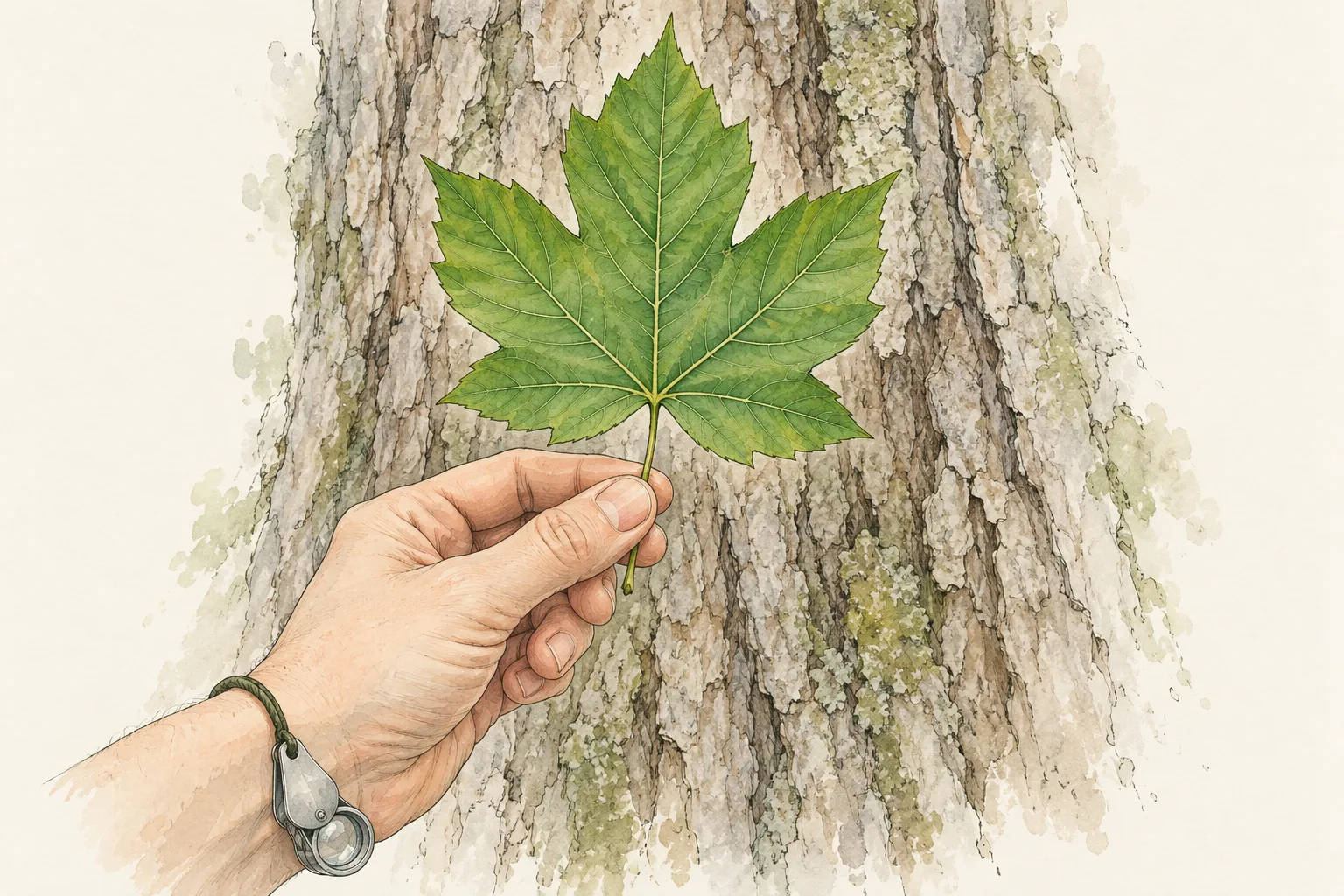
A hand holding up a single leaf with five pointed, toothed lobes against the bark of a large tree trunk; a small folding hand lens hangs from the wrist. (enlarge)

Follow the idea

  1. Is it alive?

    The seven characteristics of living organisms, and how to test whether something is alive

    Not started
  2. Naming with a key

    Dichotomous keys: naming organisms by features you can see, and building a key of your own

    Not started
  3. Species and scientific names

    Species, two-part scientific names and, in the Supplement, what DNA shows about relationships

    Not started
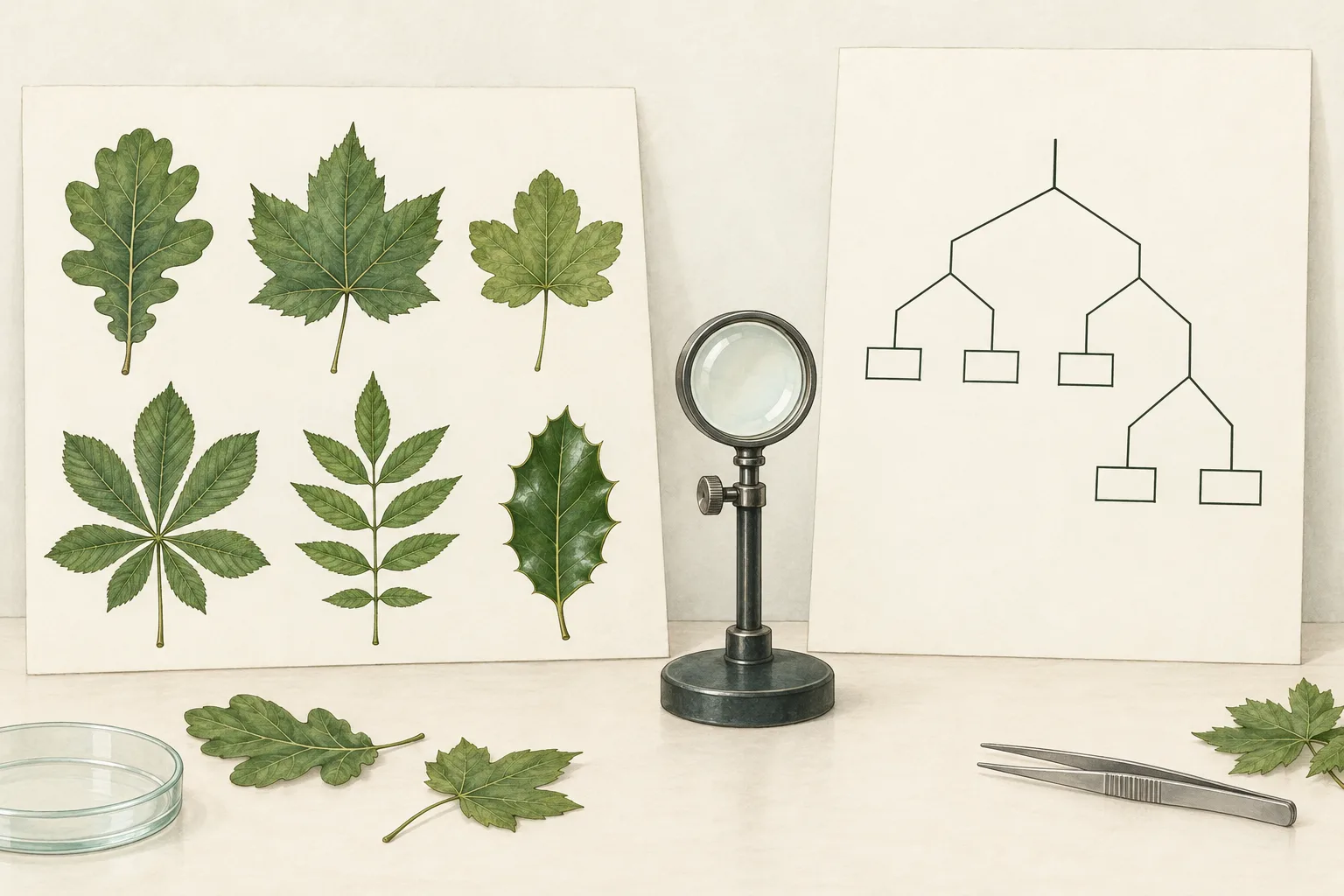
Six pressed leaves on a pale card: an oak, a sycamore and a field maple leaf in the top row, a horse-chestnut, an ash and a holly leaf below. Beside them a hand lens on a stand and a second card with a branching key that splits in two at every fork.

The experiment · Six mystery leaves and a hand lens · name each one with a key, then build a key of your own

Run it yourself, or project it for the class

Use the apparatus step by step and look closely at what happens. The whole experiment fits one screen, so it works on a projector too.

Open the experiment