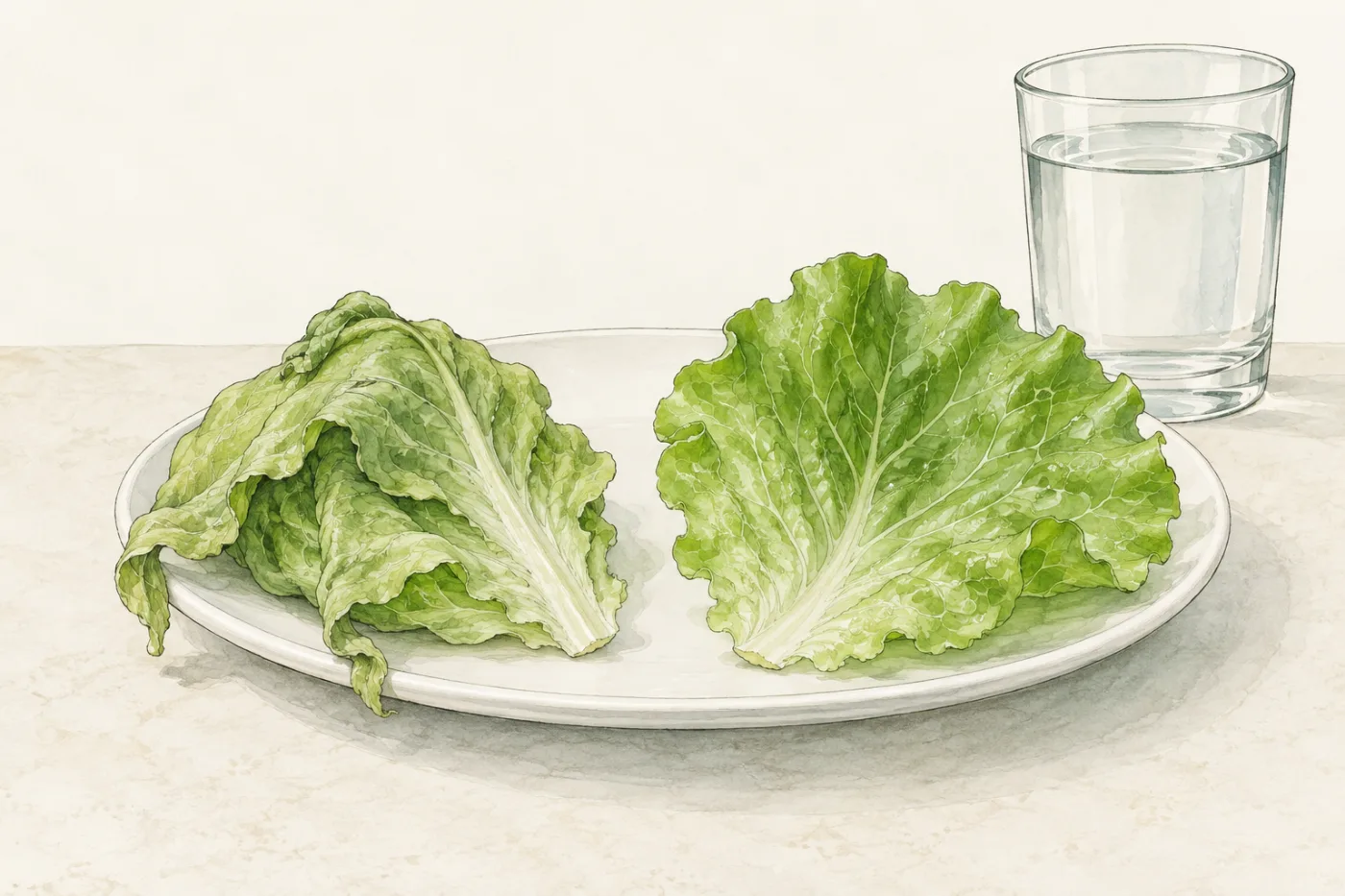
Leave a lettuce leaf on the kitchen table for an afternoon and it goes limp. Stand it in a glass of water and within an hour it is crisp again. Nothing has been added except water, and the leaf has no mouth to drink with. How does the water get into the leaf, and why does it make the leaf firm? This module follows the water: into a bag, into potato cells, and into whole plants and animals.
 (enlarge)
Water, the solvent of life
Most of a living cell is water, and most of the chemistry of life happens in it. Water is a solvent: a liquid that dissolves other substances. A substance that dissolves is a solute, and the mixture is a solution. (The same three words are used in Chemistry.)
Because so much dissolves in it, water does three big jobs in organisms:
- Digestion. Enzymes work in solution, and the small molecules made from your food, such as glucose and amino acids, dissolve in the water in your gut before they are absorbed into the blood.
- Excretion. Waste must leave the body. Urea, a waste made in the liver, is dissolved in water and removed by the kidneys in urine.
- Transport. Blood plasma is mostly water. It carries dissolved glucose, amino acids, mineral ions and carbon dioxide around the body. In a plant, water carries dissolved mineral ions up from the roots and dissolved sugars to every part of the plant.
Trap: "Water is just a filler in cells." Without water as a solvent, food could not be digested and absorbed, wastes could not be removed and nothing could be carried round the body.
Through a membrane
A cell is wrapped in a cell membrane. The membrane lets some substances through freely and holds others back: it is a partially permeable membrane. Water molecules are small and cross it easily. Many larger molecules, such as sucrose (ordinary sugar), hardly cross it at all. Some useful substances, such as glucose, are carried across by special proteins in the membrane (you met carrier proteins in active transport).
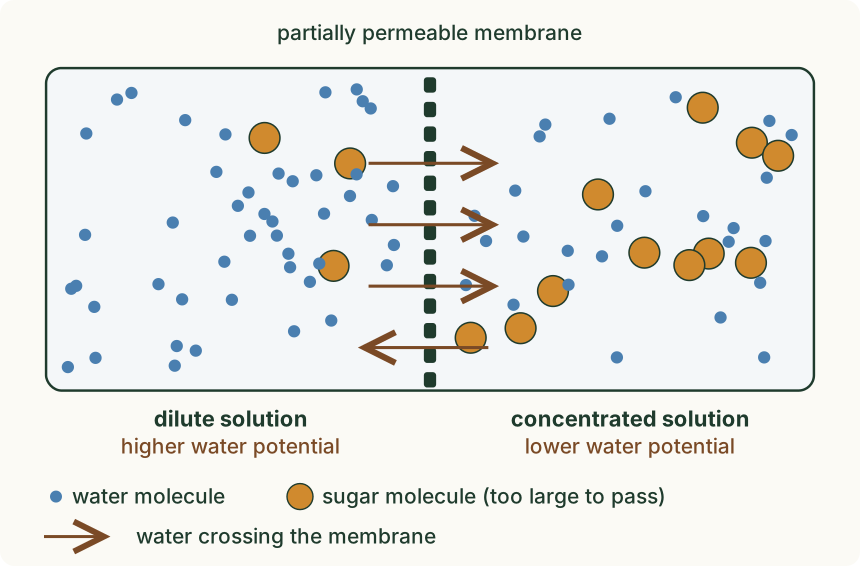
Picture a membrane that lets water through but not sugar, with a dilute sugar solution on one side and a concentrated sugar solution on the other. Water molecules move at random on both sides, and some cross the membrane each way. On the dilute side, more of the water molecules are free to move and cross; on the concentrated side, many water molecules are attracted to the sugar molecules and are less free to move. So more water molecules cross from the dilute side than come back. The sugar molecules are too large to cross this membrane.
 (enlarge)
Water diffuses through partially permeable membranes by osmosis. Scientists describe it using water potential: how freely water molecules can move. Pure water has the highest water potential; the more solute dissolved, the lower the water potential. So osmosis is the net movement of water molecules from a region of higher water potential (a dilute solution) to a region of lower water potential (a concentrated solution), through a partially permeable membrane.
Trap: "In osmosis, water moves to where there is more water." It is the other way round. Water moves from the dilute solution, where there is more water, into the concentrated solution, where there is less.
A bag that behaves like a cell
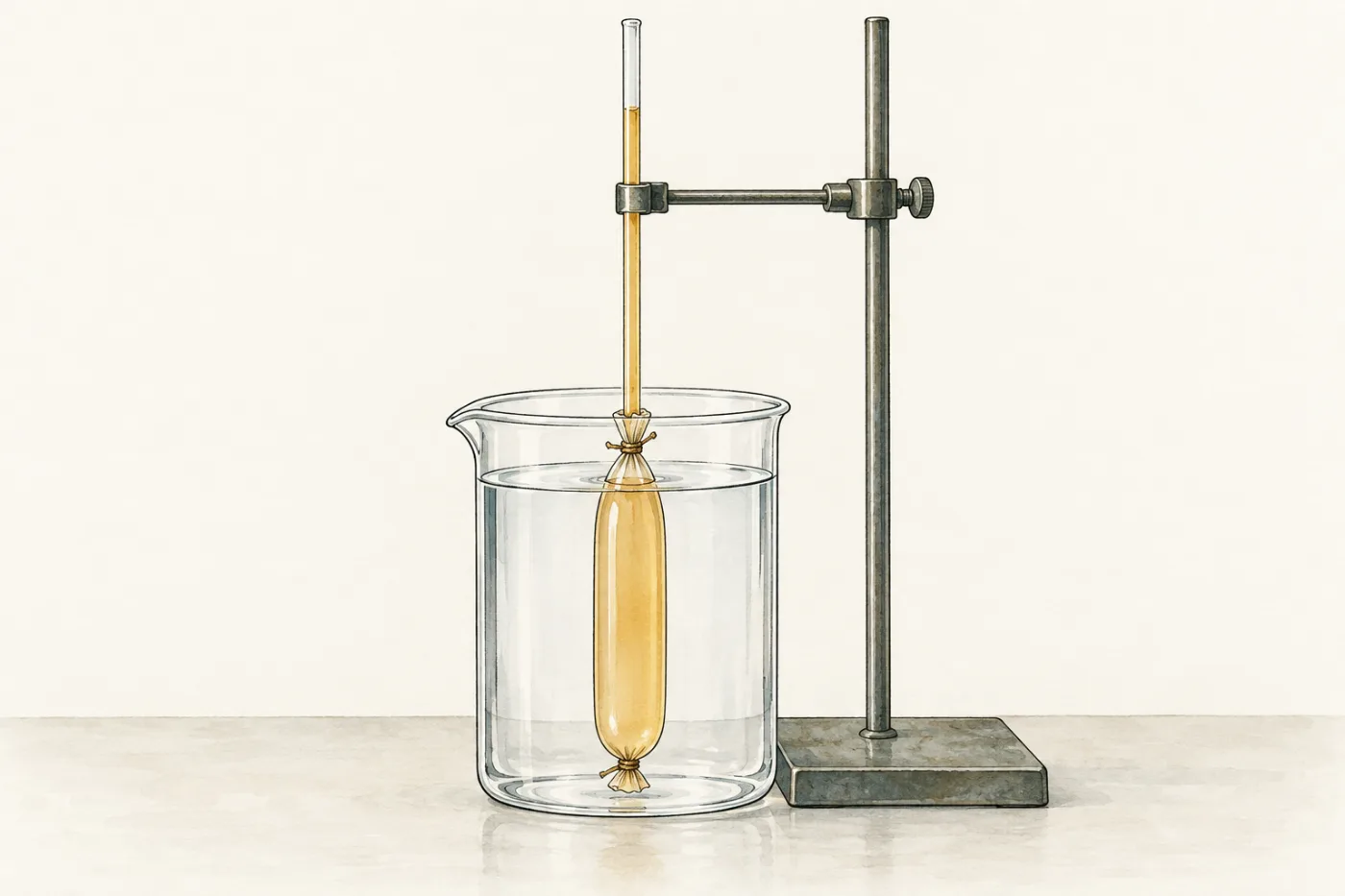
Dialysis tubing (also called Visking tubing) is thin tubing with tiny holes. Water molecules pass through it easily; sucrose (sugar) molecules are much larger and get through only very slowly. So it acts as a partially permeable membrane you can tie into a bag, and it lets you watch osmosis without a cell.
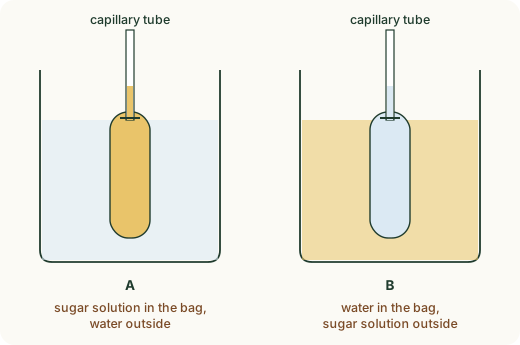
Two bags are set up. Bag A holds sugar solution and stands in water. Bag B holds water and stands in sugar solution. Each bag is tied to a narrow capillary tube, so that a small change in the volume of liquid in the bag shows as a big change in the level in the tube. Predict first: in which bag will the level rise?
 (enlarge)
For a fair comparison, each bag holds the same volume of liquid, stands in the same volume of liquid, at the same temperature, for the same time.
After 20 minutes the level in tube A has risen and bag A looks fuller and firmer. Weighed before and after, bag A went from 10.0 g to 11.3 g. The level in tube B has fallen, and bag B went from 10.0 g to 9.1 g. A third bag, of water standing in water, did not change. It is the control: with no difference in concentration it shows what happens without osmosis, so the changes in A and B must be caused by the difference in concentration, not by the tubing or by handling. (These numbers are illustrative, not measurements from one real run; they assume that almost no sugar gets through the tubing in 20 minutes.)
Bags do not always start with exactly the same mass, so changes are compared as a percentage change: (final mass − starting mass) ÷ starting mass × 100. For bag A: (11.3 − 10.0) ÷ 10.0 × 100 = +13 %. A loss gives a negative percentage.
 (enlarge)
In bag A, water moved by osmosis from the water outside (higher water potential) into the sugar solution inside (lower water potential), so the bag gained mass and the liquid was pushed up the tube. The sugar could hardly get out, so water moved in far faster than sugar moved out. In bag B, water moved out of the bag into the sugar solution outside. In both bags, water was crossing both ways all the time; the change shows the net movement.
Key idea: Osmosis is the net movement of water through a partially permeable membrane, from a dilute solution (higher water potential) to a more concentrated solution (lower water potential).