Skip to content

Osmosis · 3 parts · syllabus 3.2

Why does a limp lettuce leaf go crisp in water?

Cut potato cylinders, weigh them, soak them in water and five sucrose solutions, and weigh them again. Work out the percentage changes, find the concentration with no net movement of water, then bend the cylinders and look at their cells.

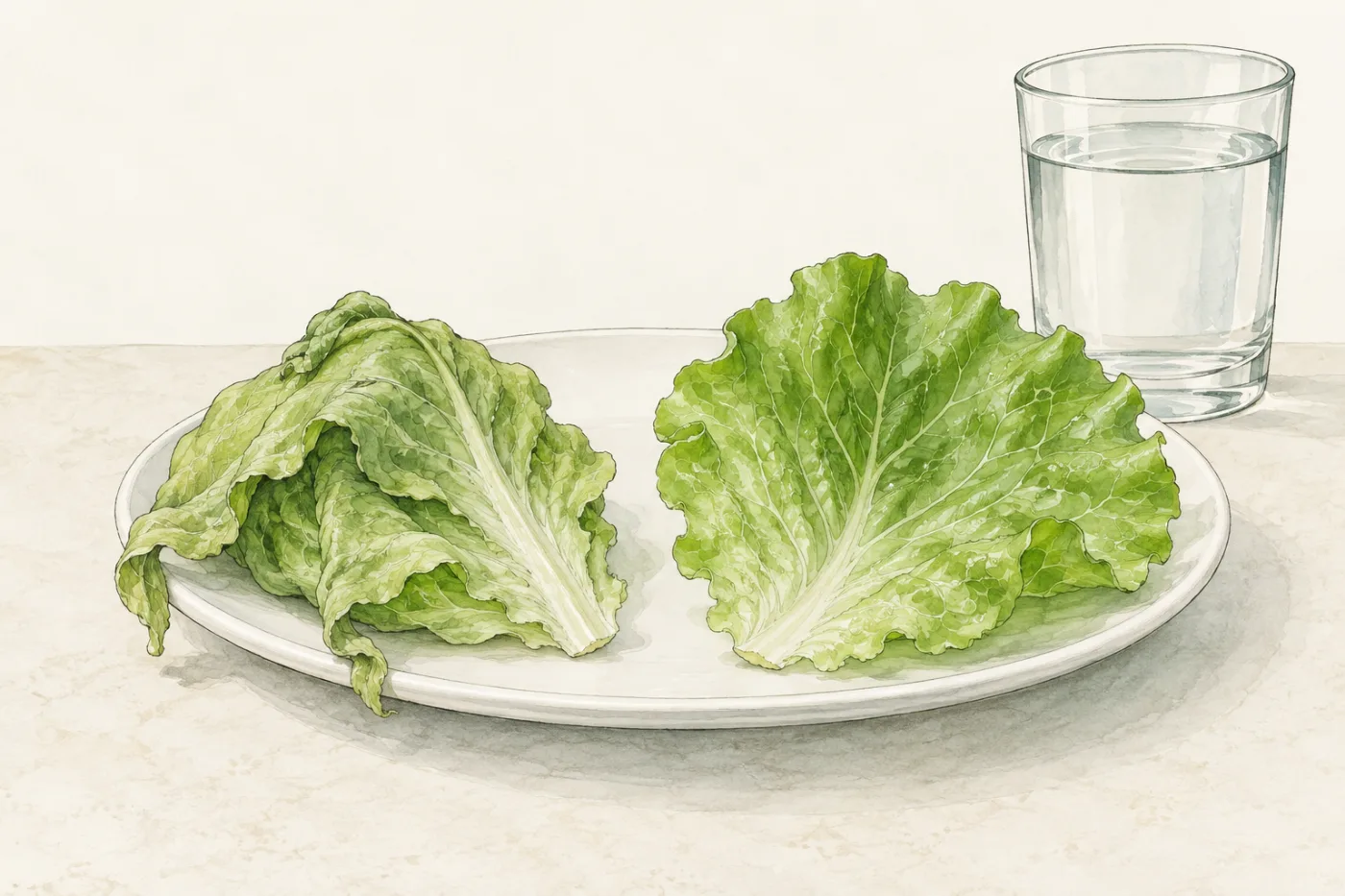
Two lettuce leaves on a plate: one limp and folded, one crisp after standing in a glass of water. (enlarge)

Follow the idea

  1. Water and membranes

    Water as a solvent, partially permeable membranes and osmosis, with dialysis-tubing bags

    Not started
  2. Potato in sugar solutions

    Plant tissue in solutions of different concentrations: the potato investigation, turgor and plasmolysis

    Not started
  3. Water for whole organisms

    Water potential in organisms: root hairs, wilting, red blood cells and food that keeps

    Not started
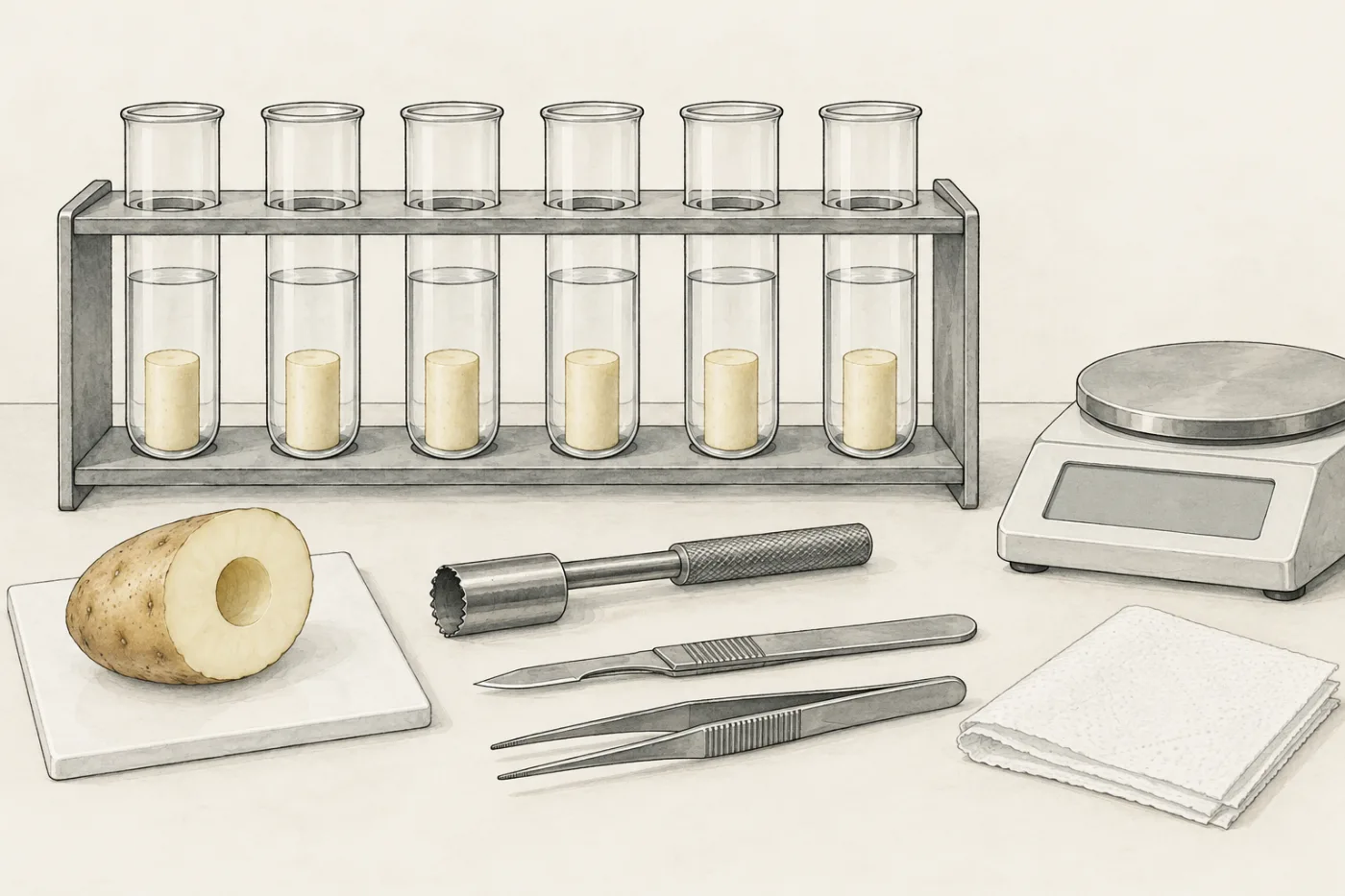
A rack of six short glass tubes of clear liquid, each with a potato cylinder standing covered at the bottom; half a potato, a cork borer, a scalpel, forceps, a paper towel and a balance in front.

The experiment · Potato cylinders in sucrose solutions · weigh them, find the zero point, bend them

Run it yourself, or project it for the class

Use the apparatus step by step and look closely at what happens. The whole experiment fits one screen, so it works on a projector too.

Open the experiment