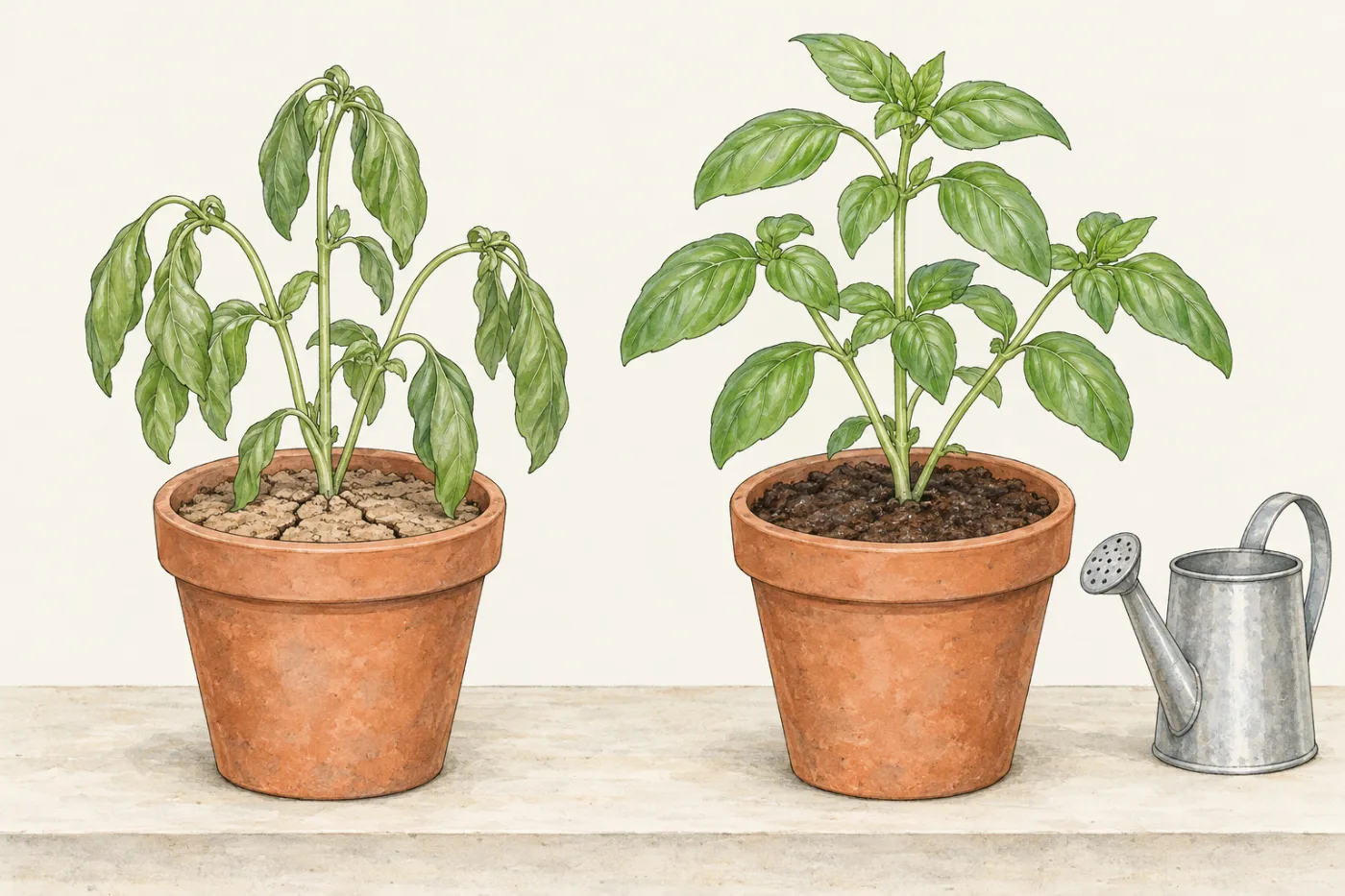
On a hot afternoon a pot plant on a windowsill droops: its stems bend over and its leaves hang down. Water the soil, and an hour later the same plant stands up straight again. A patient in hospital who needs fluid through a drip is never given pure water; one common drip is a salt solution of the right concentration. Both depend on osmosis, now in whole organisms.
 (enlarge)
Water into roots
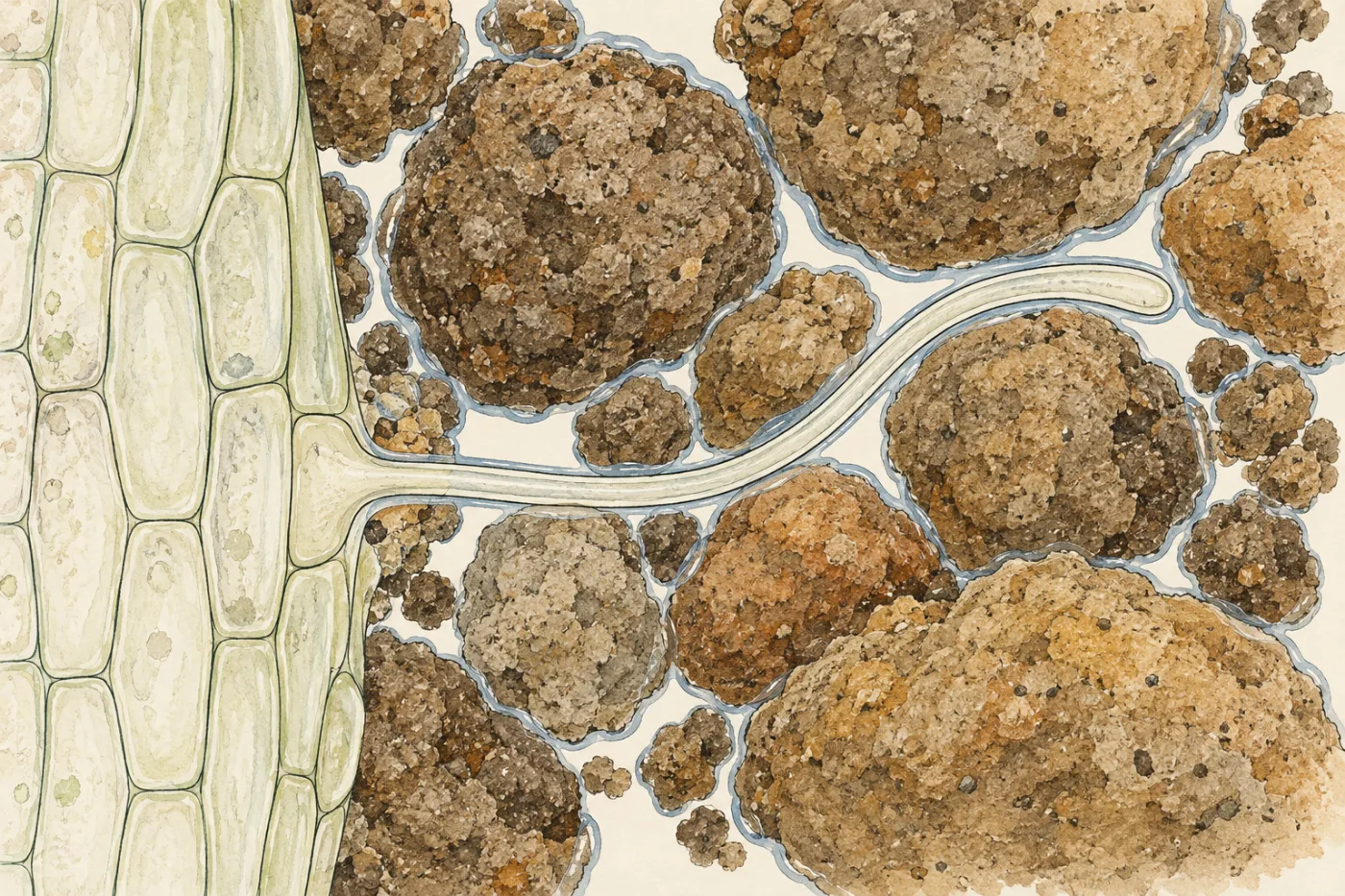
A plant takes in almost all its water through the root hair cells near the tips of its roots. Each root hair is a long, thin outgrowth that reaches between the soil particles, into the film of water around them. Its long shape gives a large surface area for water to enter.
 (enlarge)
The soil water is a very dilute solution: it has a high water potential. The cell sap in the root hair cell is more concentrated, so it has a lower water potential. Water therefore moves by osmosis from the soil, through the cell membrane, into the root hair cell. From there it moves on by osmosis from cell to cell across the root, each time from a higher to a lower water potential, until it reaches the tubes that carry it up the plant (the next topics follow it to the leaves).
What if the soil water is not dilute? Near the sea, or after too much fertiliser has been added, the soil water can be more concentrated than the cell sap. Then it has the lower water potential, and water leaves the root by osmosis instead of entering. The plant cannot take up water and wilts, even though the soil is wet.
Trap: "Roots suck water up." Root hair cells take in water by osmosis because their cell sap has a lower water potential than the soil water. If the soil water's water potential becomes lower, water leaves the roots.
Wilting and support
Leaves and young stems have no wood to hold them up. They stay upright because their cells are turgid: water inside each cell presses outwards on the cell wall. On a hot, windy day a plant can lose water from its leaves faster than its roots take it in. Its cells lose water, become flaccid, and the plant wilts. After watering, water enters the cells by osmosis, they become turgid again, and the leaves and stems are held up.
Animal cells have no wall
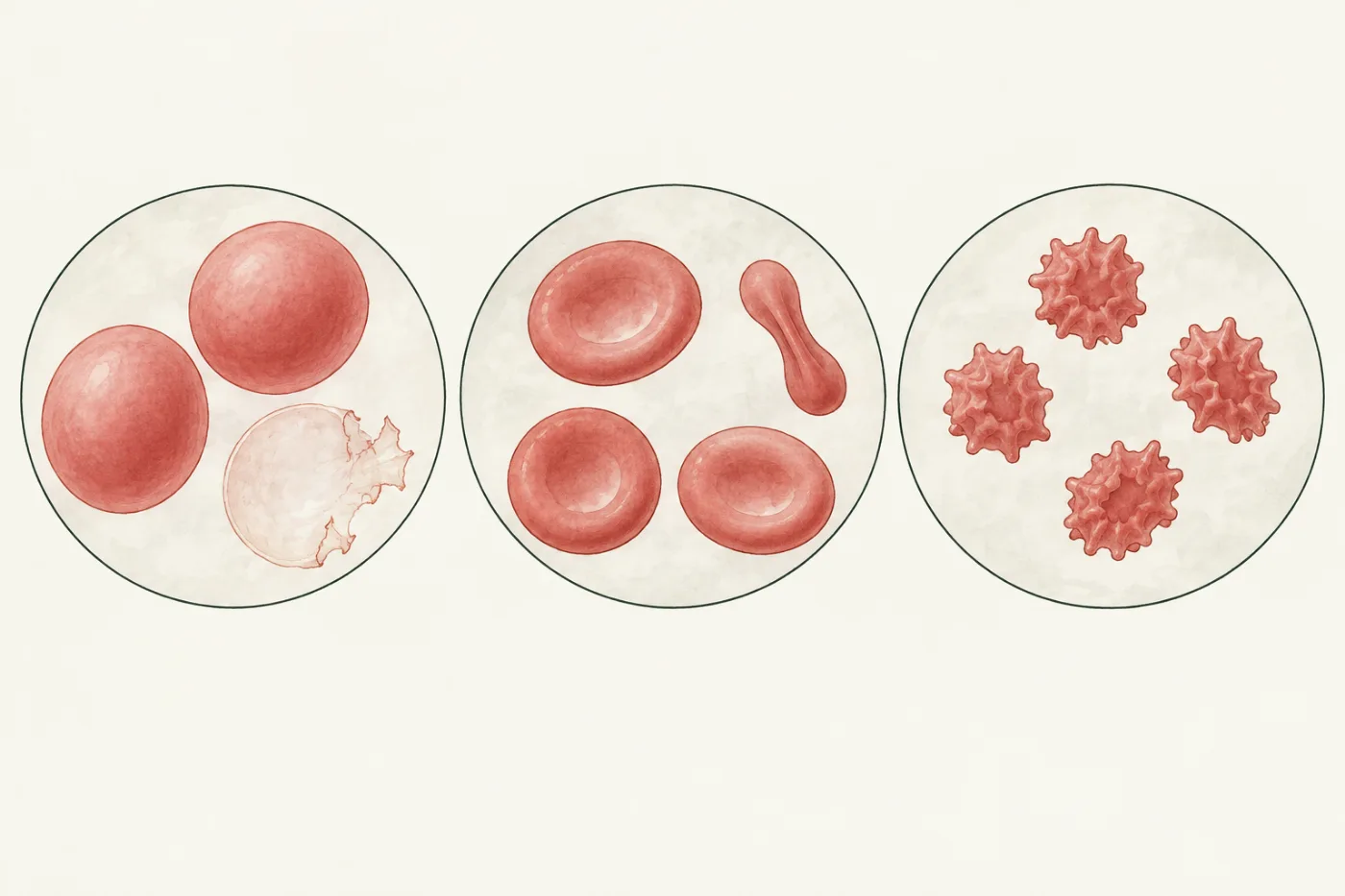
An animal cell has a cell membrane but no cell wall, so nothing stops it swelling. Red blood cells show what happens:
- In pure water, which has a higher water potential than the cell contents, water enters the cells by osmosis. They swell, and many burst.
- In a salt solution with the same water potential as blood plasma, as much water enters as leaves. The cells keep their normal shape: a disc, thinner in the middle.
- In a strong salt solution, which has a lower water potential, water leaves the cells. They shrink and their edges crinkle.
 (enlarge)
That is why a drip is never pure water (a common one is a salt solution with the same water potential as blood plasma), and why the body keeps the water potential of its blood steady: the kidneys remove extra water or keep it in.
Trap: "A red blood cell in water becomes turgid, like a plant cell." A plant cell has a strong cell wall that pushes back and stops it bursting. A red blood cell has no wall, so it swells until it bursts.
Water potential decides
Every example in this module follows one rule: water moves by osmosis from a region of higher water potential to a region of lower water potential, through a partially permeable membrane. The same rule helps food keep. Jam is a very concentrated sugar solution and salted fish is coated in salt. Many bacteria and fungi that land on them lose water by osmosis and cannot grow (a few kinds of yeast and mould can cope, which is why jam can still go mouldy).
Key idea: Organisms gain or lose water by osmosis depending on water potential. Root hair cells take in water from dilute soil water; plants wilt when their cells lose water; animal cells, with no wall, can burst in water or shrink in strong solutions.