Leave a slice of bread in the toaster too long and it comes out black. The black layer is char: the heat has broken down the substances in the bread and driven other substances off as gases and vapour, leaving a crust that is rich in carbon, like the charcoal on a barbecue. So bread, which looks nothing like charcoal, contains a lot of carbon. In this part you find out which few substances every food is built from, and how a handful of small building blocks can make things as different as bread, egg white and butter.
Three elements, and a fourth
Carbon is an element: a substance made of only one kind of atom, which cannot be split into anything simpler. Almost everything in food apart from the water is made of just four elements: carbon (C), hydrogen (H), oxygen (O) and nitrogen (N).
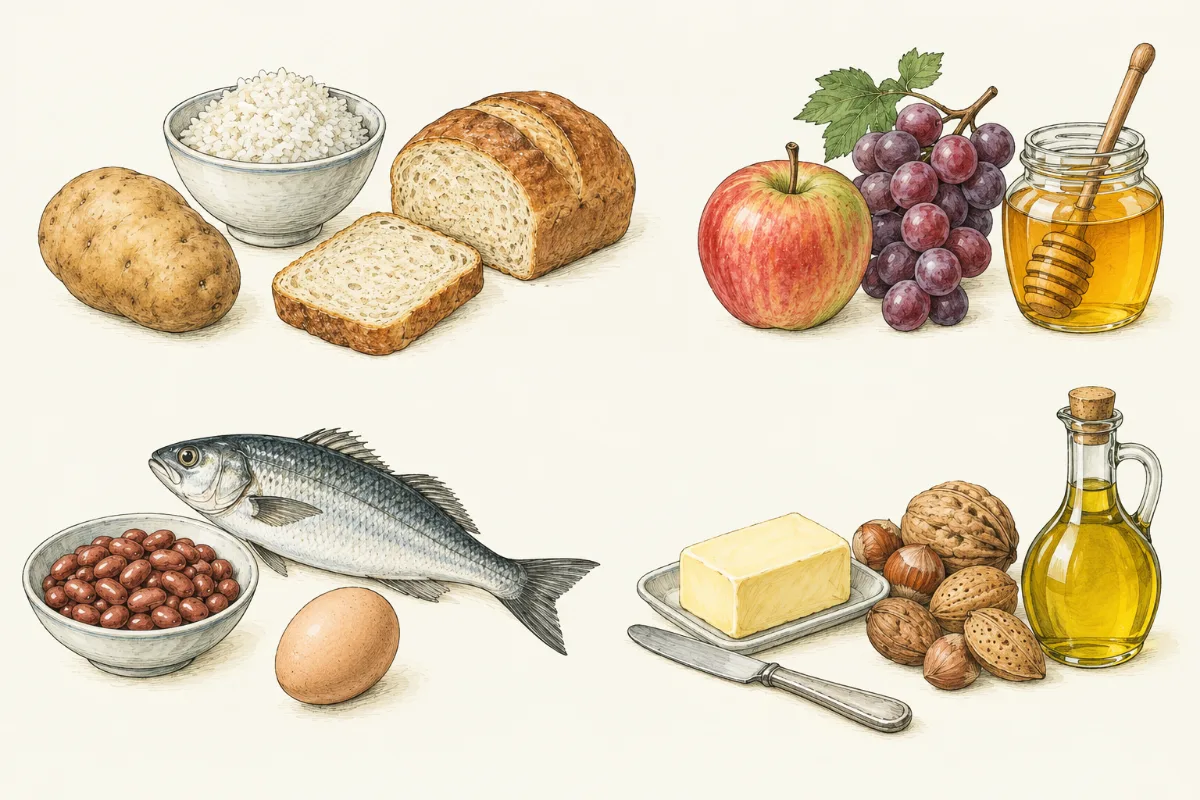
These elements are built into three main kinds of nutrient. Carbohydrates are the sugars and starches: the sugar in fruit and honey, and the starch in bread, rice and potatoes. Foods that supply proteins include egg white, meat, fish and beans. Fats and oils are the greasy part of food. They are the same kind of substance, except that a fat such as butter is solid at room temperature, while an oil such as cooking oil is liquid.
 (enlarge)
Top row: starchy foods, then sugary foods. Bottom row: protein-rich foods, then fatty foods.
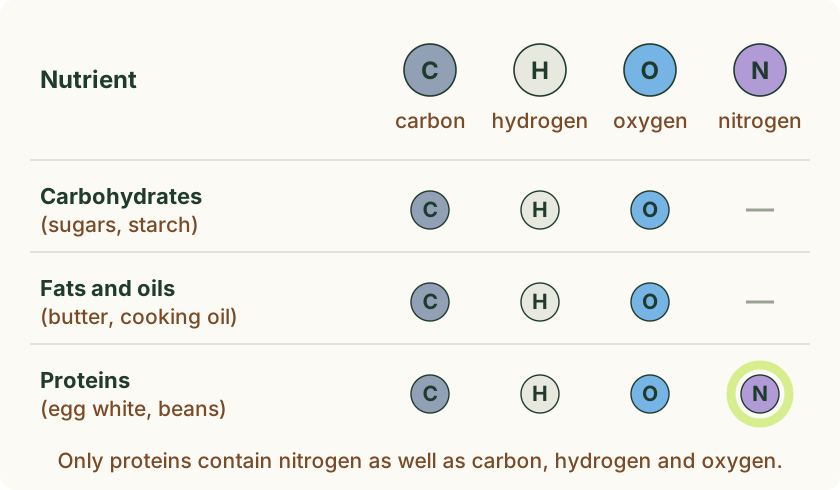
Carbohydrates, fats and oils all contain carbon, hydrogen and oxygen, and nothing else. Proteins contain carbon, hydrogen and oxygen too, but they also contain nitrogen (and many contain a little sulfur as well). So of the three main nutrients, proteins are the only one that contains nitrogen.
 (enlarge)
Trap: "Proteins are made of carbon, hydrogen and oxygen, just like carbohydrates." Proteins contain nitrogen as well. Of these three nutrients, only protein contains nitrogen, so if you know a substance is a carbohydrate, a fat or a protein and it contains nitrogen, it is the protein.
Big molecules from small ones
In food, atoms of these elements are joined in groups called molecules. Some food molecules are small. Glucose, the sugar your cells use for respiration, is a small molecule: 6 carbon atoms, 12 hydrogen atoms and 6 oxygen atoms. Other food molecules are huge, and the surprise is that the huge ones are built from small ones joined together, like a necklace made of beads.
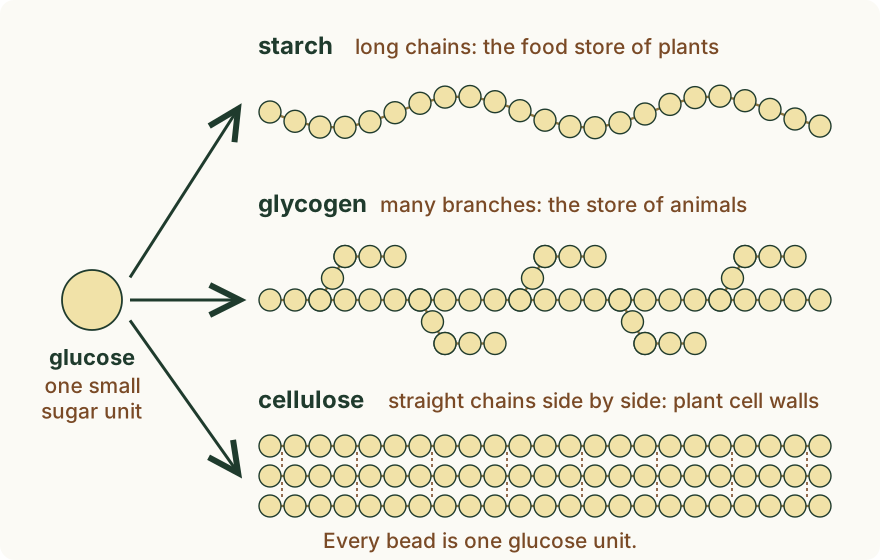
Starch is made of thousands of glucose units joined into long chains. Plants make it to store glucose, which is why potatoes, rice and bread are full of it. Glycogen is the glucose store of animals and fungi: your liver and muscles hold it, ready to break back down to glucose when you need energy. Its chains have many branches. Cellulose is made of glucose too, but its chains are long and straight and lie side by side, held together in strong fibres. Plant cell walls are made of it, and it is the fibre in the vegetables you eat.
 (enlarge)
So starch, glycogen and cellulose are all made from glucose. What makes them different is how the glucose units are joined and arranged: long chains, branched chains, or straight chains packed side by side. (In Chemistry you may meet long molecules like these, built from many joined units, as polymers.)
Trap: "Glycogen and cellulose are made from different sugars." All three are made from glucose. They differ in how the glucose units are joined and arranged, not in the units themselves.
Trap: "Starch is a sugar, because it is made of glucose." Starch is made from a sugar, but a chain of thousands of glucose units behaves differently from glucose itself: starch does not taste sweet and hardly dissolves in water. In the next part you will see that the tests for sugar and for starch are different too.
Proteins: chains of amino acids
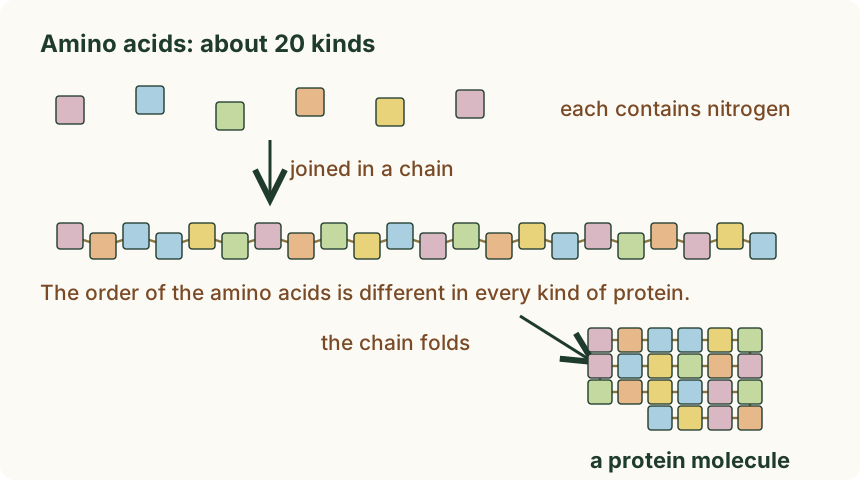
Proteins are built from small molecules called amino acids, and every amino acid contains nitrogen. That is where the nitrogen in proteins comes from. There are about 20 different kinds of amino acid. A protein is a long chain of them, often hundreds long, which folds up into a shape of its own.
 (enlarge)
Starch repeats one unit, glucose, again and again. A protein chain is different, because it uses many kinds of amino acid, and their order is different in every kind of protein. That is how the same twenty amino acids can make the protein of egg white, the keratin in your hair and enzymes such as amylase. (Enzymes are proteins that speed up chemical reactions in living things; amylase, in your saliva, breaks starch down into sugar.)
Trap: "A protein is one kind of unit repeated, like starch." A protein chain is made of many different kinds of amino acid, joined in an order that belongs to that protein.
Fats and oils: glycerol and fatty acids
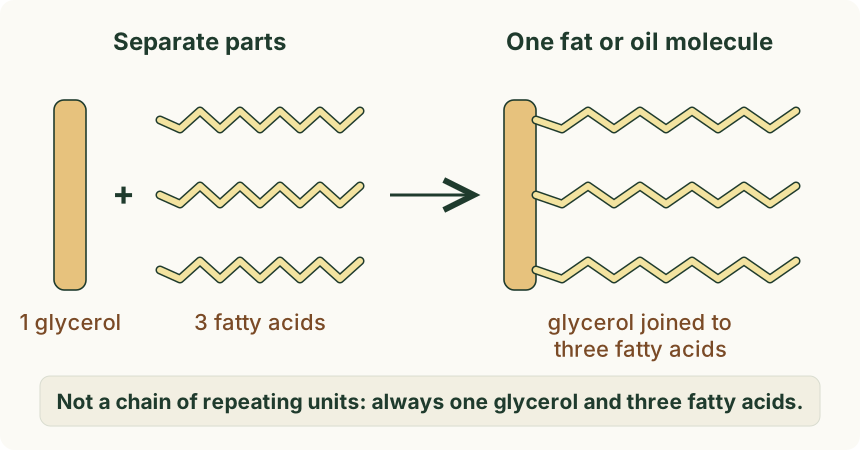
Fats and oils are built in yet another way. Each fat or oil molecule is made of three fatty acids joined to one small molecule of glycerol. A fatty acid is a long, thin molecule, made mostly of carbon and hydrogen. The three fatty acids are each joined to the glycerol and stick out side by side, like the teeth of a short comb.
 (enlarge)
There is no long chain of repeating units here: every fat or oil molecule has one glycerol and three fatty acids. Fats and oils differ in which fatty acids they have, and that decides whether they are solid at room temperature, like butter, or liquid, like olive oil.
Trap: "A fat is a long chain of fatty acids." A fat molecule is one glycerol joined to three fatty acids. The fatty acids are joined to the glycerol, not to each other, so it is not a chain.
Taken apart and built again
When you digest a meal, enzymes break the large molecules back into small ones: starch into glucose, proteins into amino acids, and fats and oils into fatty acids and glycerol. Only small molecules can pass into your blood. Your cells then use them to build large molecules of their own: glucose into glycogen in your liver, amino acids into your own proteins. The same small building blocks are taken apart and put together again.
Key idea: Carbohydrates, fats and oils contain carbon, hydrogen and oxygen; proteins contain these and nitrogen as well. Large molecules are made from smaller ones: starch, glycogen and cellulose from glucose; proteins from amino acids; fats and oils from fatty acids and glycerol (one glycerol and three fatty acids, not a chain).