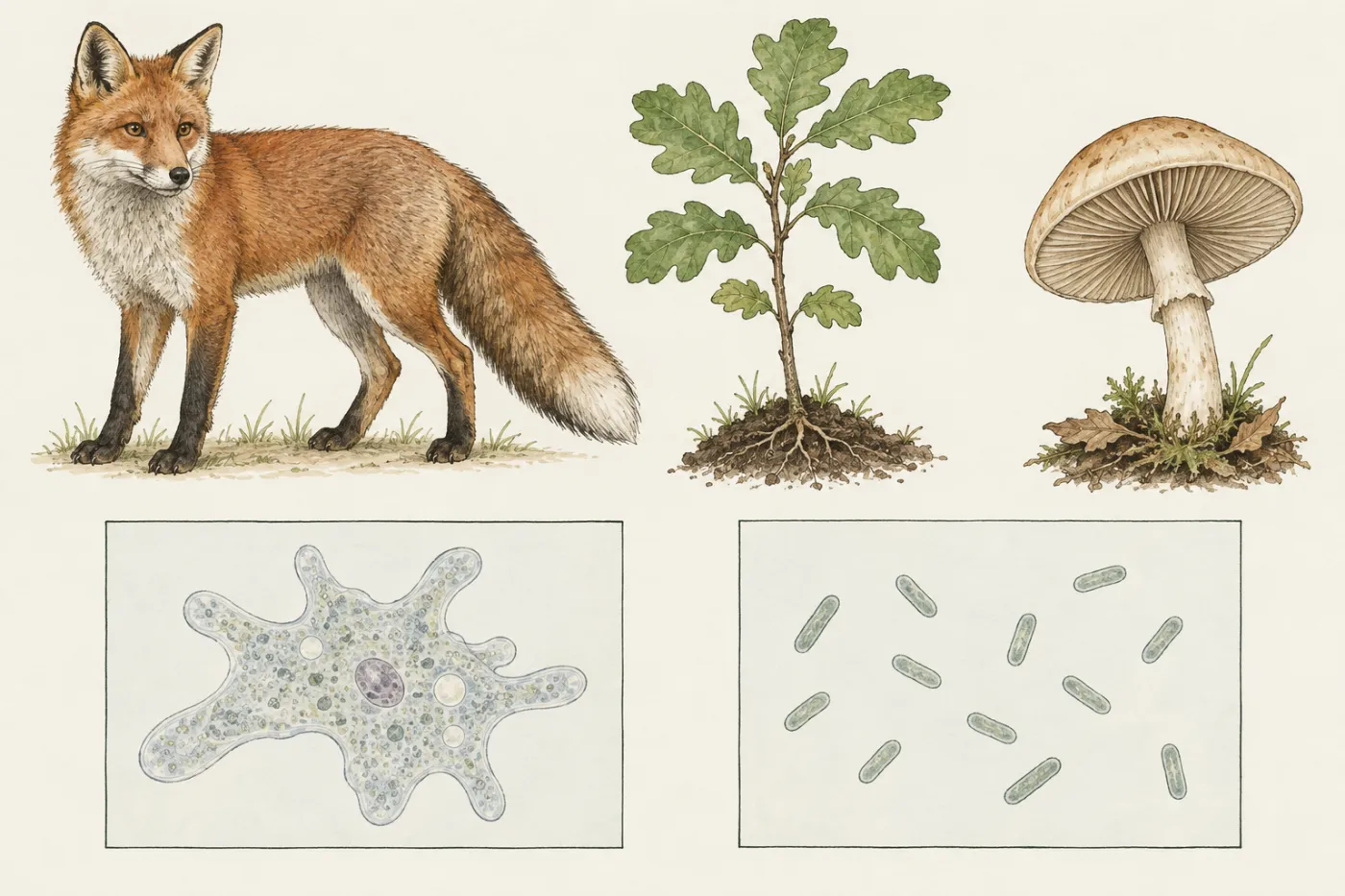
After a wet autumn night, a ring of mushrooms appears on a lawn. They grow out of the ground and never move, so they look like small plants, but they are not green. A spoonful of yoghurt holds millions of living things, each one a single cell far too small to see. A drop of pond water holds single cells that swim and hunt. And the cold you caught last winter was caused by something that is not made of cells at all. Two kingdoms are not enough for all of these.
This part is Supplement content (syllabus 1.3.4–1.3.7): extra material for pupils taking the Extended papers.
 (enlarge)
Five kingdoms
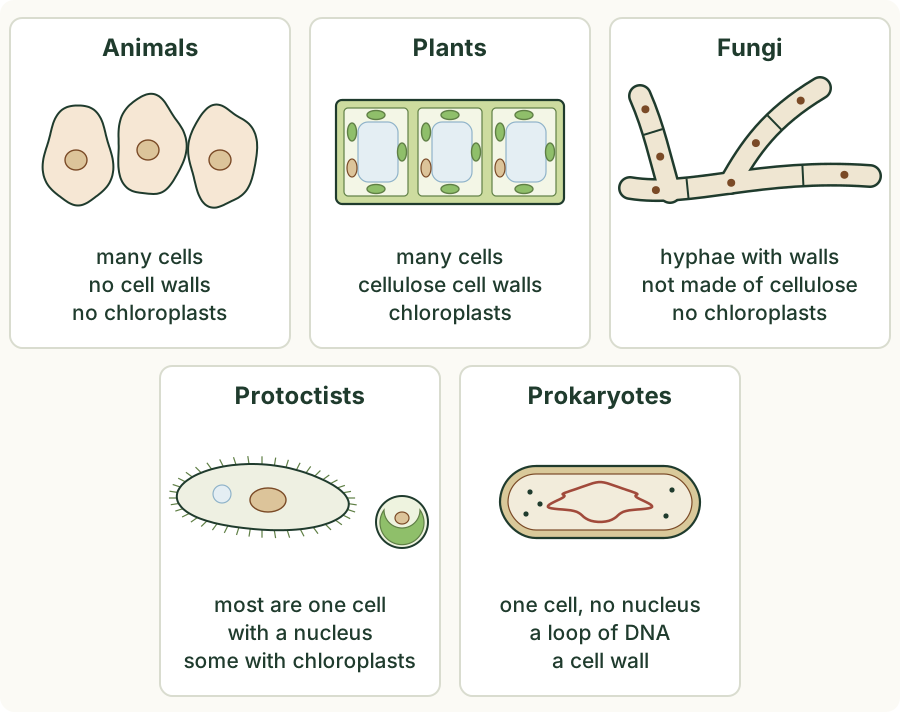
Biologists place every organism into one of five kingdoms: animals, plants, fungi, protoctists and prokaryotes. The features that decide are about the cells: how many there are, whether each has a nucleus, a cell wall and chloroplasts, and how the organism gets its food. The nucleus holds the cell's genetic material, its DNA; the cytoplasm is the jelly that fills the rest of the cell.
| Kingdom | Cells | Nucleus | Cell wall | Chloroplasts | Food | Examples |
|---|---|---|---|---|---|---|
| Animals | many | yes | none | none | eat other living things | fox, trout, beetle |
| Plants | many | yes | yes, cellulose | yes | photosynthesis | oak, fern, maize |
| Fungi | most are threads called hyphae; some are single cells | yes | yes, not cellulose | none | digest dead or living matter outside the body | mushroom, bread mould, yeast |
| Protoctists | most are a single cell | yes | some | some | some like animals, some like plants | Paramecium, Amoeba, Chlorella |
| Prokaryotes | single cells | no: a loop of DNA in the cytoplasm | yes | none | many ways | bacteria |
 (enlarge)
Take the three organisms that do not fit the first two kingdoms. The mushroom is only the part of a fungus that makes spores: tiny cells, each of which can grow into a new fungus. The rest is a mass of thin threads, the hyphae, spreading through the soil and the dead leaves. The hyphae have cell walls, but the walls are not made of cellulose, and there are no chloroplasts, so the fungus cannot make its own food. Instead, the hyphae release enzymes, substances that break large food molecules into small ones, onto the dead leaves. The leaves are digested outside the fungus's body, and the hyphae absorb the dissolved food. So the mushroom is a fungus. Yeast is a fungus too, even though each yeast is a single cell.
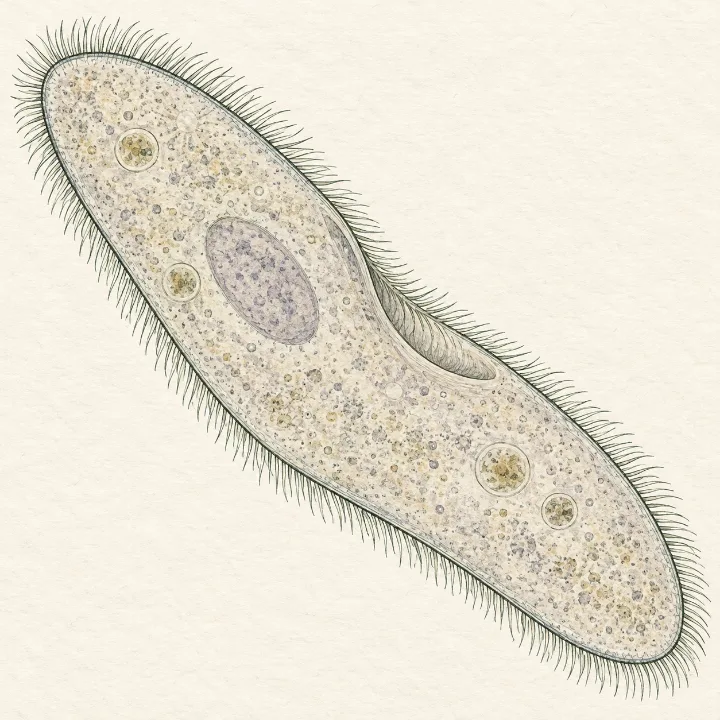
Paramecium lives in pond water. It is a single cell with a nucleus, covered in tiny hairs (cilia) that it swims with, and it takes in food like an animal. Being one cell rules out the animal and plant kingdoms, and the nucleus rules out the prokaryotes. It has no cell wall, so it is not a fungus: it is a protoctist. Other protoctists, such as Chlorella, have chloroplasts and make their own food like plants, but they are still single cells.
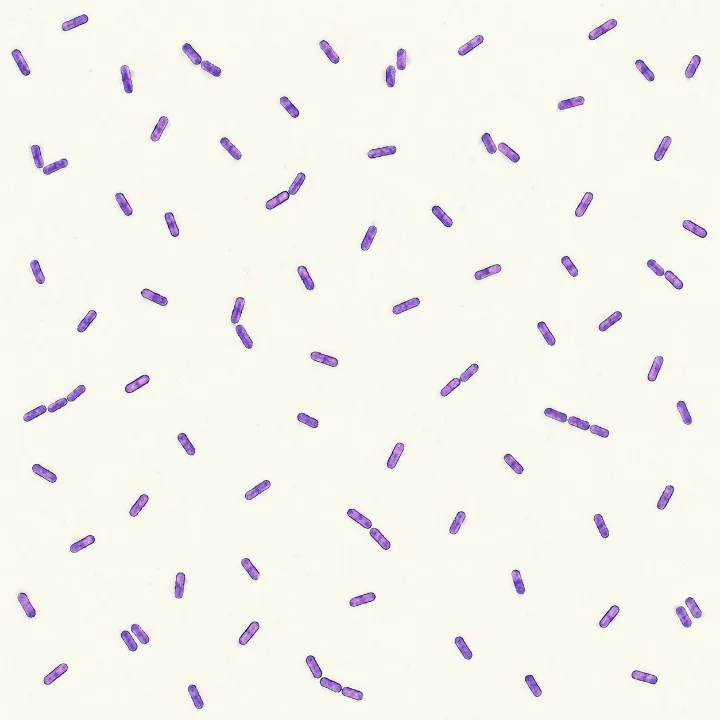
The bacteria in yoghurt are single cells with no nucleus: their DNA is a loop lying in the cytoplasm, and each cell has a cell wall. They are prokaryotes.
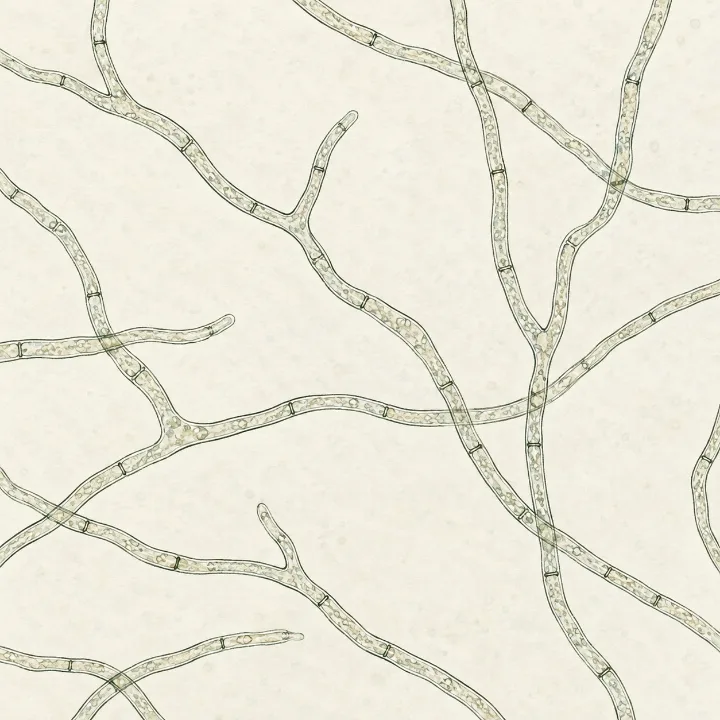
Trap: "Mushrooms are plants." A mushroom has no chloroplasts and cannot make its own food; it digests dead material outside its body. Its hyphae have walls that are not made of cellulose. It is a fungus.
Trap: "It is one cell with a nucleus, so it must be a protoctist." Animals, plants and fungi have a nucleus in their cells too; only prokaryotes have none. And yeast is a single cell with a nucleus, yet it is a fungus: it has a cell wall that is not made of cellulose, no chloroplasts, and it absorbs its food as hyphae do. Check every feature in the table, not the nucleus alone.
Ferns and flowering plants
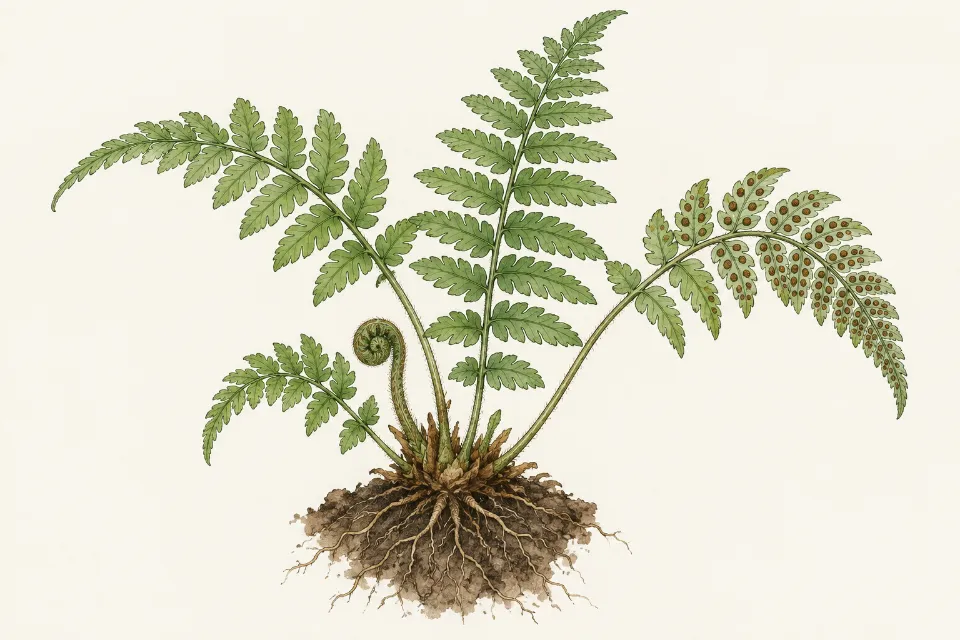
The plant kingdom is split into groups too. Two of them are the ferns and the flowering plants. A fern has leaves called fronds, often divided into many small leaflets, and young fronds unroll from a tight coil. A fern never has flowers or seeds. It reproduces by spores, tiny cells that can each grow into a new fern, made in tiny spore cases; on many ferns the spore cases grow in brown clusters on the underside of the fronds.
 (enlarge)
Trap: "The brown spots under a fern frond are a disease." They are clusters of spore cases. A fern has no flowers and no seeds; it reproduces by spores.
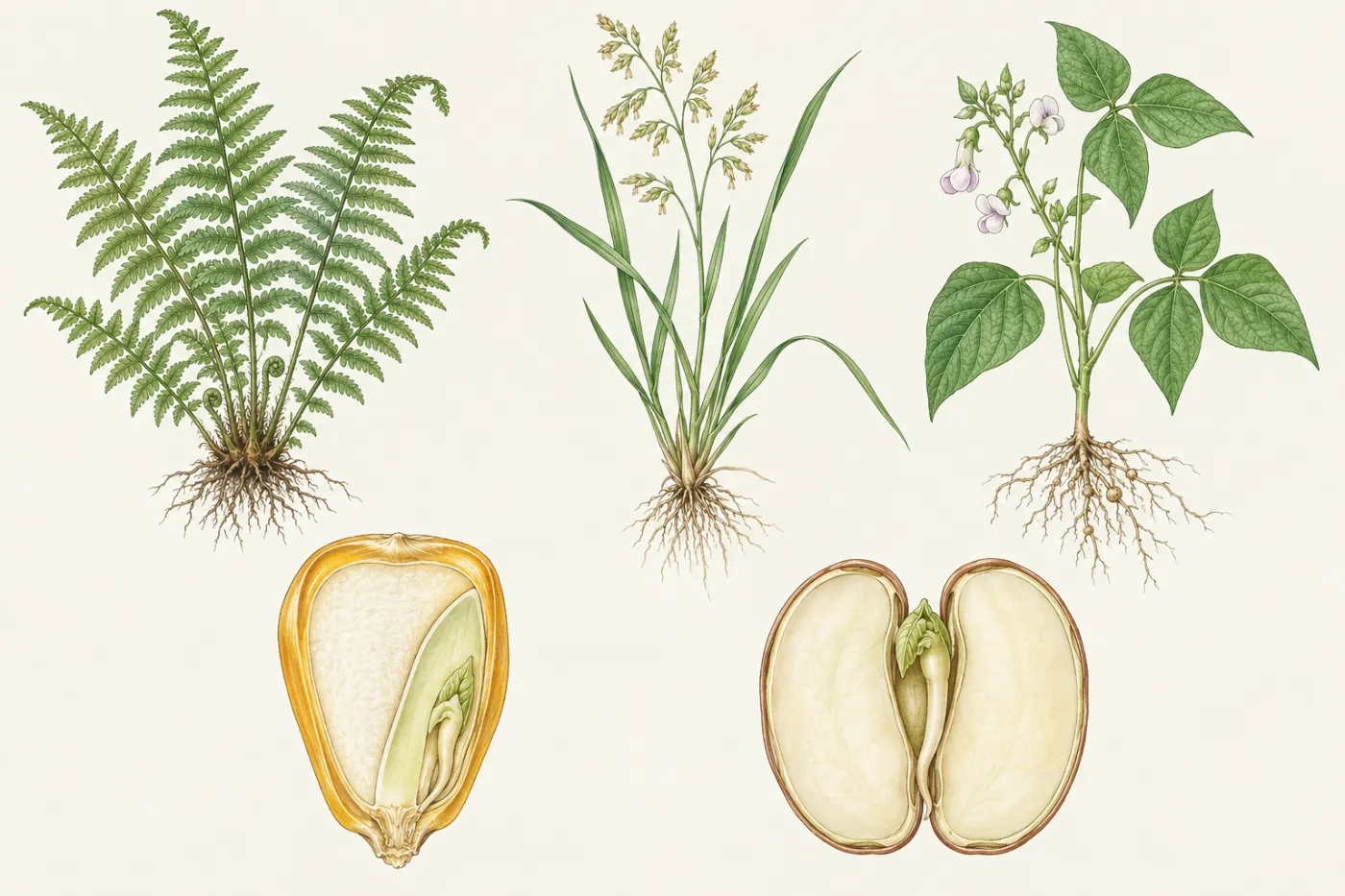
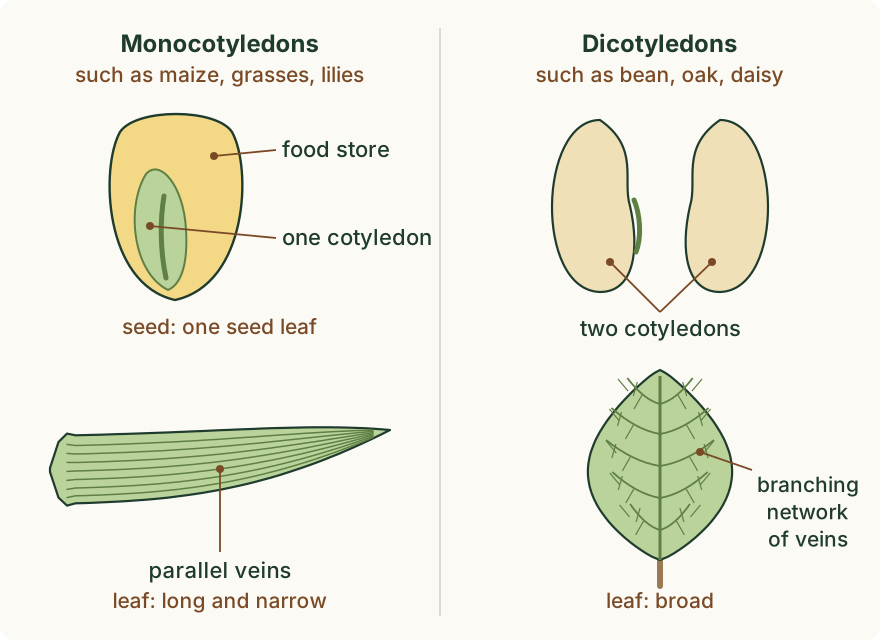
Flowering plants have flowers and make seeds. They are placed in two groups, named after the cotyledons, the seed leaves inside the seed. Monocotyledons (monocots), such as maize and grasses, have one cotyledon in each seed, and their leaves are usually long and narrow with parallel veins, running side by side along the leaf. Dicotyledons (dicots), such as the bean, have two cotyledons in each seed, and their leaves are usually broad, with a branching network of veins.
 (enlarge)
Maize and bean show the difference. Soak a maize grain and cut it lengthwise: most of it is a food store, with one small cotyledon on one side. Soak a bean and it splits into two large halves: the two cotyledons, with the young shoot and root between them. The leaves agree. A maize leaf is long and narrow, with veins running side by side from base to tip. A bean leaf is broad, and its veins branch again and again into a net. So maize is a monocot and the bean is a dicot.
 (enlarge)
Trap: "Grass has no flowers, so it is not a flowering plant." Grass flowers are small and green, with no bright petals, but they are flowers, and they make seeds: wheat, rice and maize grains are seeds. Grasses are monocots.
Viruses
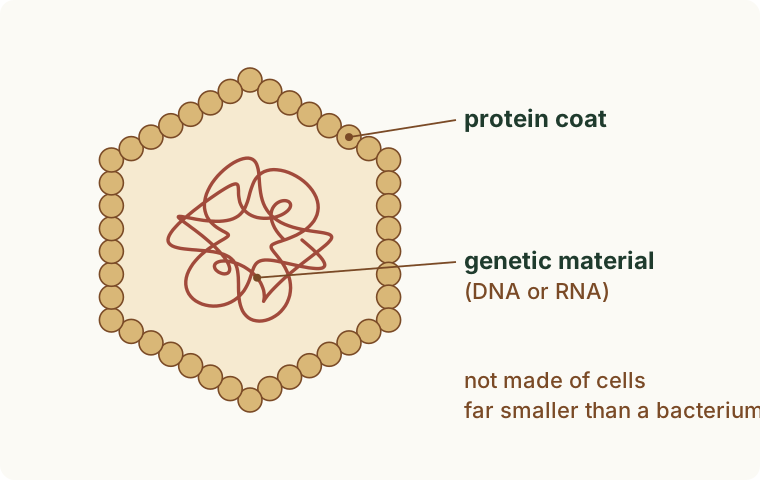
A virus is not made of cells. It is a tiny particle: genetic material (DNA or RNA) inside a protein coat. It has no cytoplasm and no ribosomes (the tiny parts of a cell that make proteins), it does not feed, respire or grow, and it is far smaller than a bacterium: you need an electron microscope to see one. A virus can make copies of itself only inside the living cells of another organism. Because it is not made of cells, a virus is not placed in any of the five kingdoms.
 (enlarge)
Trap: "Viruses are bacteria." A bacterium is a living cell, with a cell wall, a membrane, cytoplasm and a loop of DNA: it is a prokaryote. A virus is not a cell at all, only genetic material inside a protein coat.
The last stage of the experiment brings these organisms to the bench: the mushroom, Paramecium, the yoghurt bacteria, the fern, maize, the bean and a virus. Make a first guess for each if you like; then look closer, through the hand lens or at a microscope print, before you choose its kingdom or plant group. The virus has its own dish: not in any kingdom.
Key idea: (Supplement) Every organism is placed in one of five kingdoms: animals, plants, fungi (hyphae with walls not made of cellulose, no chloroplasts, digest food outside the body), protoctists (mostly single cells with a nucleus) and prokaryotes (single cells with no nucleus and a cell wall). Ferns have fronds and make spores, not flowers or seeds. Flowering plants are monocotyledons (one cotyledon, parallel veins) or dicotyledons (two cotyledons, branching network of veins). A virus is genetic material inside a protein coat; it is not made of cells and is in no kingdom.