Skip to content

Mass, weight and density · 3 parts · syllabus 1.3, 1.4

Why does a big log float when a small stone sinks?

Weigh the same block on Earth, the Moon and Mars to tell mass from weight; then measure the density of a wooden block, a stone and cooking oil yourself, predict what floats, and test it in water.

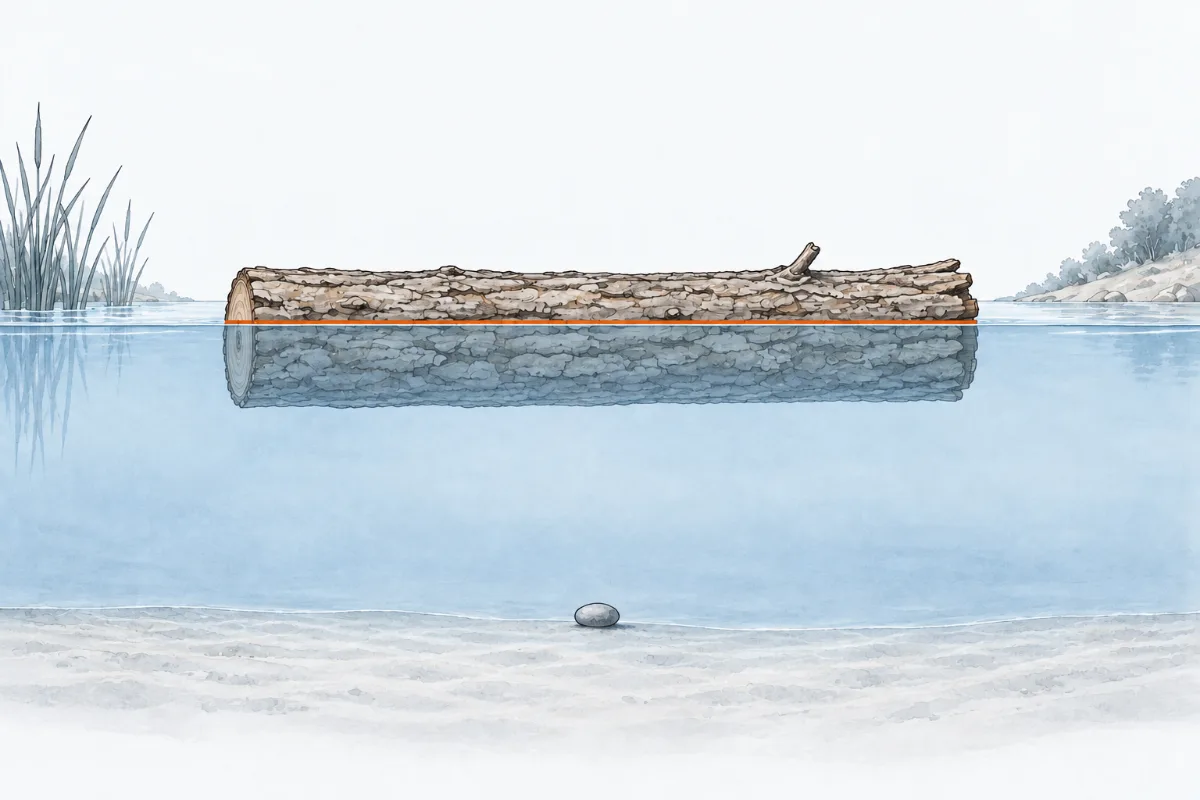
A big log floating in a river with a little more than half of it under the water, and a small pebble lying on the riverbed below. (enlarge)

Follow the idea

  1. Mass and weight

    Mass and weight: what a balance measures, newtons, and the gravitational field strength g = W / m on Earth, the Moon and Mars

    Not started
  2. Measure a density

    Density as mass per unit volume, and how to measure it for a regular solid, an irregular solid and a liquid

    Not started
  3. Float or sink

    Floating and sinking: predicting from densities which objects float and which liquid floats on another

    Not started
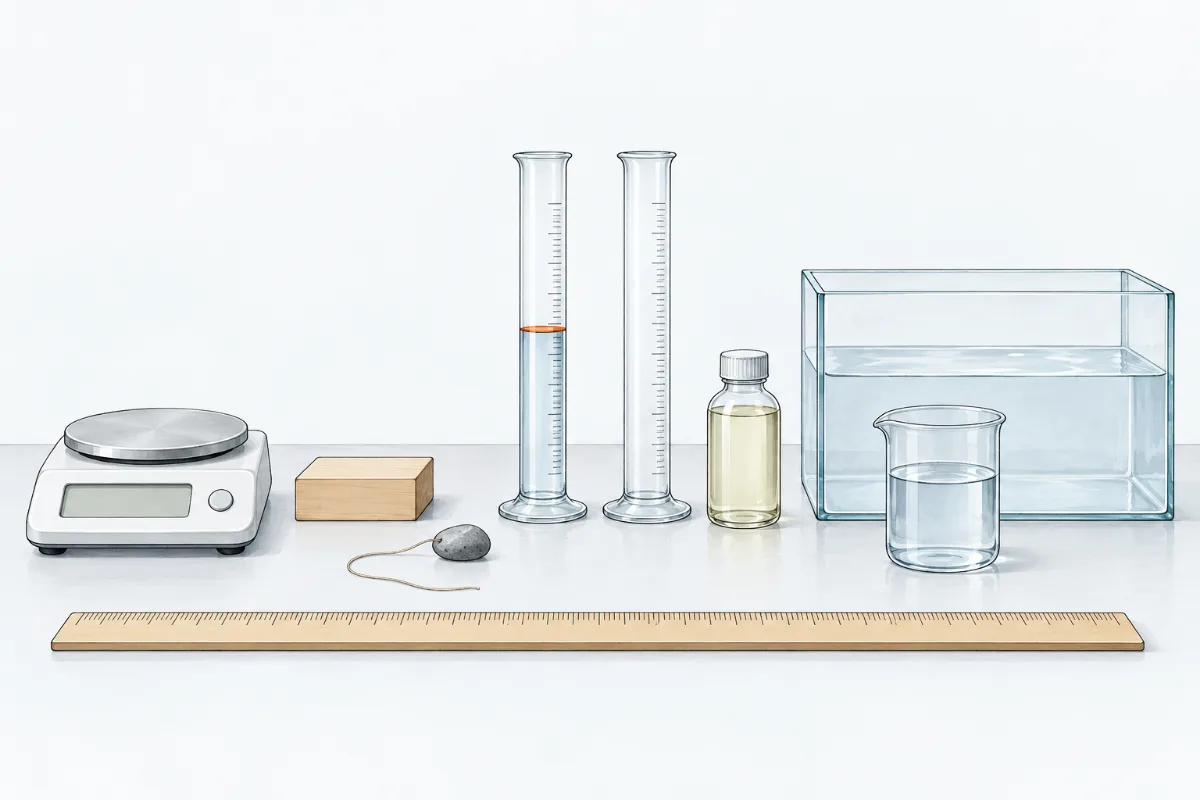
A balance, a wooden block, a small stone on a thread, two measuring cylinders, a bottle of oil, a beaker and a tank of water on a bench, with a half-metre rule in front.

The experiment · Weigh, measure, calculate · then predict and test

Run it yourself, or project it for the class

Use the apparatus step by step and look closely at what happens. The whole experiment fits one screen, so it works on a projector too.

Open the experiment