Hold your breath for a few seconds. Every cell in your body is still using oxygen and making carbon dioxide, and within a minute you feel the urge to breathe out. Nothing pumps the oxygen into your blood or pulls the carbon dioxide out of it. How do these gases get in and out, millions of times a second, without any machinery?
Through the cell membrane
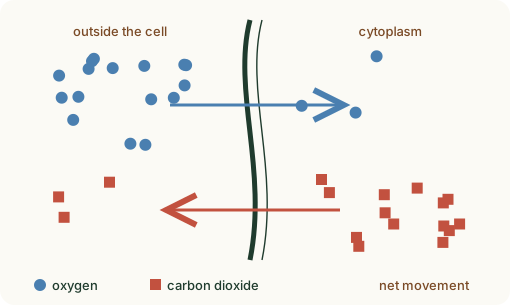
Every cell is surrounded by its cell membrane. Small molecules such as oxygen, carbon dioxide and water pass through it. So a substance can diffuse into or out of a cell whenever there is a concentration gradient across the membrane. A respiring cell keeps using up oxygen, so the concentration of oxygen inside stays lower than outside, and oxygen keeps diffusing in. It keeps making carbon dioxide, so carbon dioxide keeps diffusing out.
 (enlarge)
Key idea: Substances move into and out of cells by diffusion through the cell membrane, down their concentration gradients.
Gases in the lungs
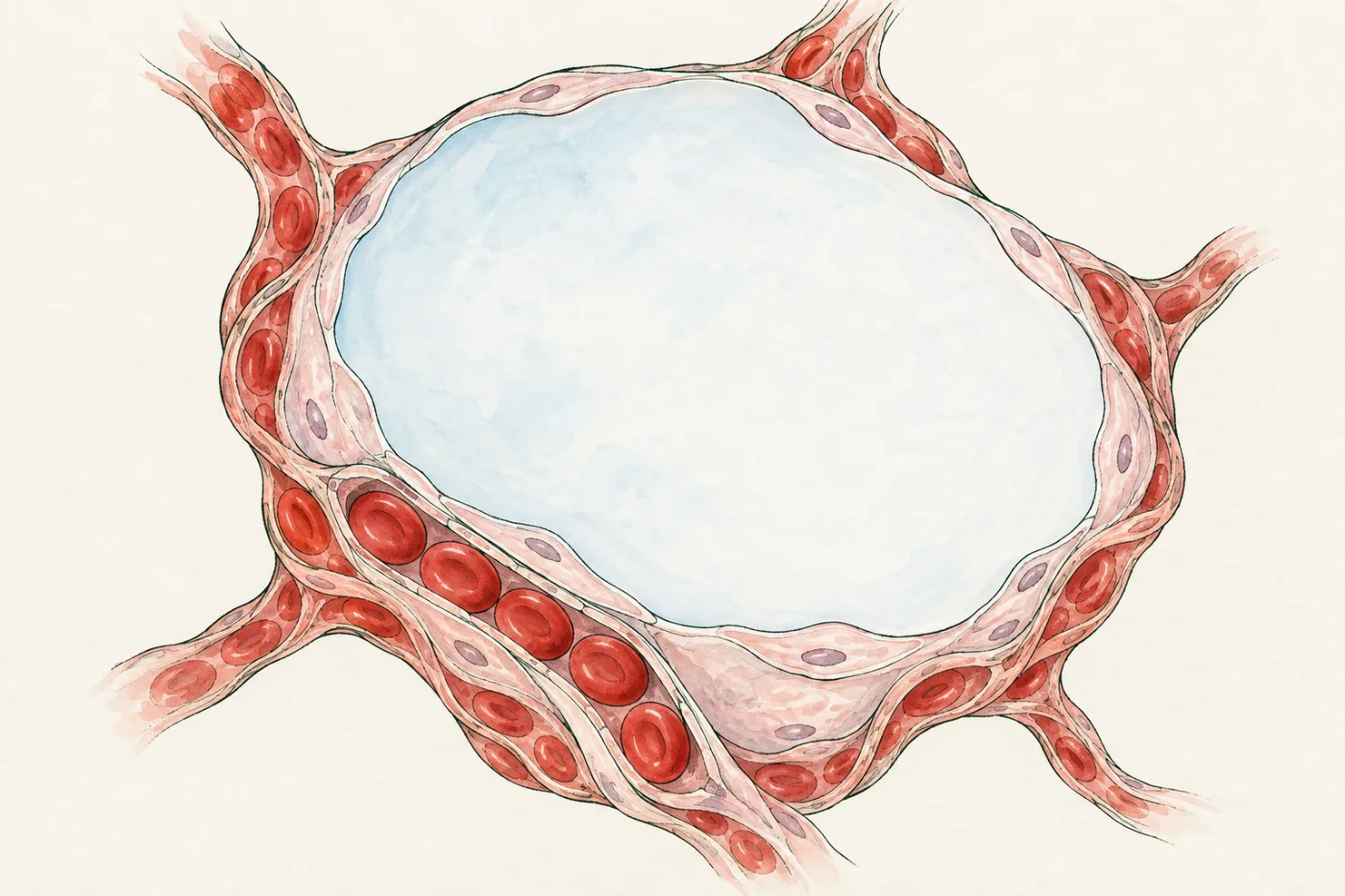
Deep in your lungs are millions of tiny air sacs, each wrapped in fine blood vessels called capillaries. The air in a sac has a high concentration of oxygen; the blood arriving from the body has a low one. Oxygen diffuses from the air, through the thin wall of the sac and the thin wall of the capillary, into the blood. Carbon dioxide diffuses the other way, from the blood into the air, and you breathe it out.
 (enlarge)
Look at the factors from the agar cubes. The walls are very thin, so the distance is short. Millions of air sacs give a huge surface area. Breathing brings fresh air in, and the blood carries oxygen away, so the concentration gradient stays steep.
Gases in a leaf
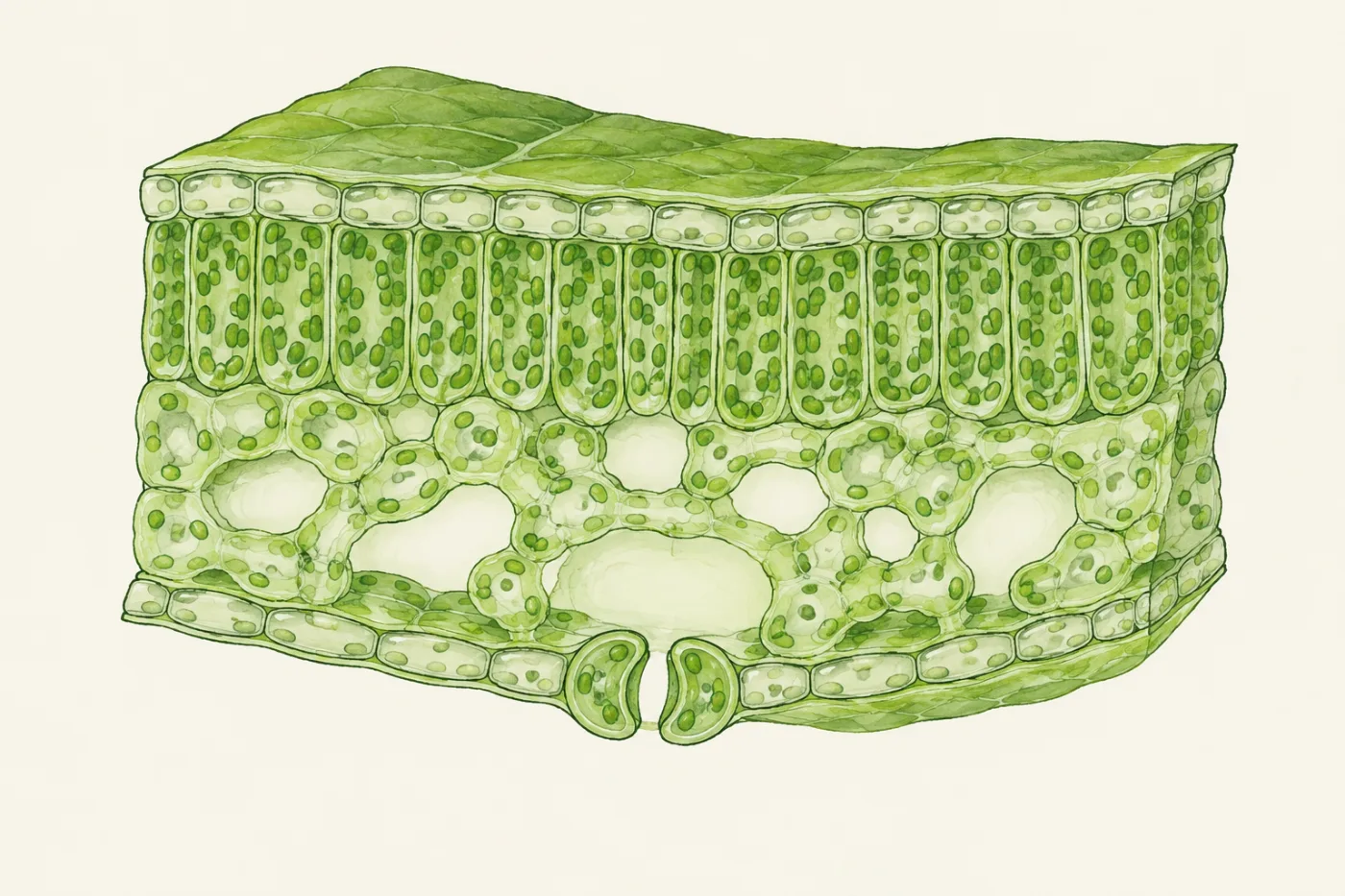
A leaf in sunlight uses carbon dioxide to make sugar. Carbon dioxide diffuses from the air into the leaf through tiny pores on its lower surface, the stomata, and then through the air spaces between the cells to the cells that use it. The oxygen that the leaf makes diffuses out the same way. Water vapour also diffuses out through the stomata.
 (enlarge)
Dissolved substances
Diffusion also moves dissolved substances, which are called solutes. Water is a good solvent: many substances dissolve in it, so they can be carried and can diffuse in living things. After a meal, digested food such as glucose diffuses from the small intestine into the blood. Waste urea diffuses out of cells into the blood, which carries it to the kidneys.
Trap: "Oxygen diffuses into the blood because the body needs it." Particles have no purpose. Oxygen diffuses into the blood only because its concentration is higher in the air than in the blood. Breathing and blood flow keep it that way.
Back to cell size
The agar cubes showed why a cell must be small: substances reach its middle by diffusion, which is fast only over short distances, and a small cell has a large surface for its volume. A large animal cannot rely on diffusion alone to reach every cell from its skin. Instead it has special exchange surfaces, such as the lungs, and blood to carry substances close to every cell.