You cannot watch glucose being made inside a leaf, and you cannot weigh it as it forms. But a leaf in the light turns much of its glucose into starch, and starch is easy to detect: iodine solution turns blue-black with it. That gives you a way to ask a leaf what it needs. Take one thing away from a leaf, give it a day in the light, then test it for starch, beside a control leaf that still has that thing. If the leaf without it shows no starch while its control does, that is good evidence that the leaf needs that thing to photosynthesise. (Iodine shows the starch the leaf has stored, not the photosynthesis itself: the end of this part looks at what that means.) In this part you plan tests for three needs (light, chlorophyll and carbon dioxide) and carry them out in the experiment.
Starch as the evidence
A leaf in the light makes glucose faster than it can use or send it away. It joins the extra glucose into starch, which stays as grains inside the chloroplasts. So starch in a leaf is evidence that the leaf has been photosynthesising.
That evidence only counts if the leaf had no starch at the start. A plant from a sunny windowsill is full of starch, so the plants are first destarched: kept in a dark cupboard for two days. In the dark there is no photosynthesis, but the cells keep respiring. The plant turns its stored starch back into sugar, uses it and carries it away, until the leaves have no starch left. Two days is usually long enough, but not always, so you check. Before setting anything up, you test one leaf of each plant for starch. Both should stay orange-brown.
That check is a control. It shows that any starch found later was made during the experiment, not left over from before it.
Trap: "The plants go in the dark to test whether they need light." The dark cupboard comes before the experiment, and every leaf goes through it. It removes the old starch, so that a blue-black result later can only mean starch made during the day in the light.
Testing a leaf for starch
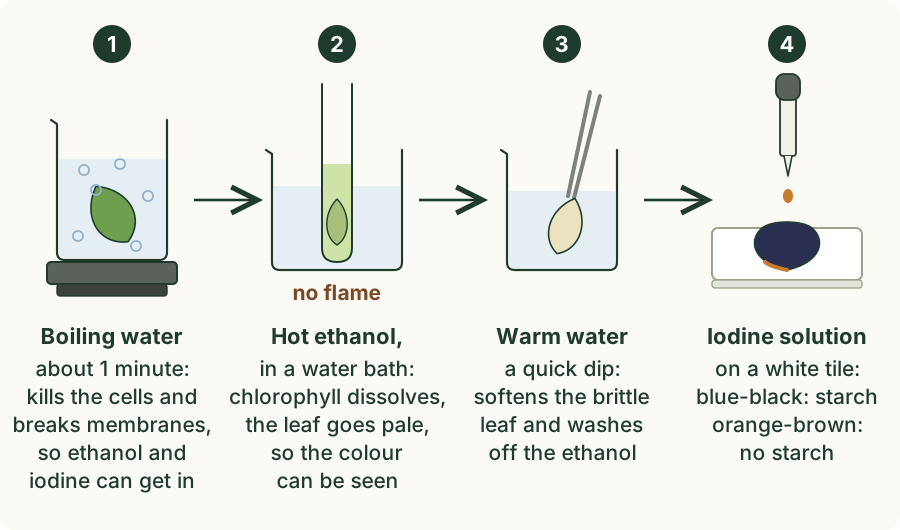
On a living leaf, iodine solution just runs off and nothing changes. There are two problems. The leaf's waxy surface and the membranes of its cells keep the iodine out of the cells, where the starch is. And even if the iodine got in, the green of the chlorophyll would hide its colour. So a leaf is prepared in four steps before the iodine goes on, and each step solves one problem:
- Boiling water, about 1 minute. The heat kills the cells and stops all their reactions, and it breaks down the membranes, so ethanol and iodine can get into the cells. It also softens the leaf.
- Hot ethanol, in a water bath. The leaf goes into a boiling tube of ethanol, which stands in a beaker of very hot water. Chlorophyll dissolves in ethanol, so the ethanol turns green and the leaf goes pale. Now any colour change can be seen.
- Warm water, a quick dip. The ethanol leaves the leaf hard and brittle. Warm water softens it again, so it can be spread flat without cracking, and washes off the ethanol.
- Iodine solution, on a white tile. Spread the leaf on the tile and cover it with iodine solution. Where there is starch, the leaf turns blue-black. Where there is none, it shows the orange-brown of the iodine. The white tile makes the colours easy to see.
 (enlarge)
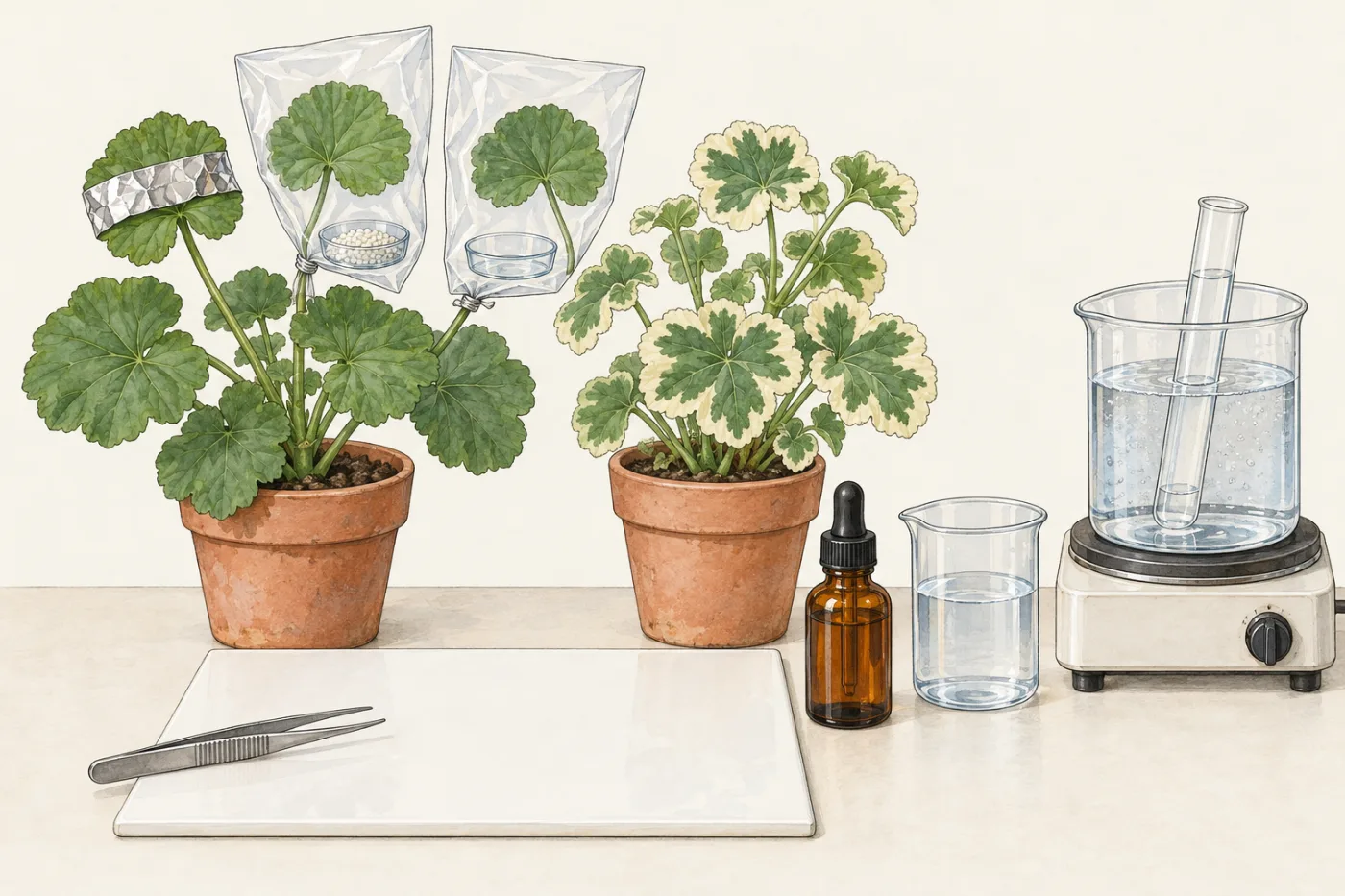
Safety: Ethanol is highly flammable. It is heated only in a water bath, with no flame anywhere near: the water is heated on an electric hotplate or poured from a kettle. Boiling water scalds, so use forceps to move the leaf and wear eye protection. Iodine solution stains skin and clothes. Soda lime (used below) is corrosive, so do not touch it.
Trap: "Heat the tube of ethanol over a Bunsen burner, so it boils faster." Ethanol vapour catches fire easily. The water bath gives enough heat with no flame.
Trap: "The ethanol washes the starch out of the leaf." Ethanol dissolves chlorophyll, not starch. Starch does not dissolve in ethanol or water, so it stays in the cells for the iodine to find.
Three things taken away, three controls
Each test takes away one thing from part of a leaf. Each also needs a control: a leaf, or part of a leaf, treated in exactly the same way except for that one thing. If the two then give different results, the thing you took away is the likely cause. Check that nothing else changed along with it: the end of this part looks at the limits. The two plants, plant A with ordinary green leaves and plant B with variegated leaves, are destarched together and later stand under the same lamp.
Light. A strip of aluminium foil is folded over both surfaces of one leaf of plant A, across its middle. The foil is opaque, so no light reaches the band underneath, from above or from below. The control is the rest of the same leaf: same plant, same air and same day, but in the light.
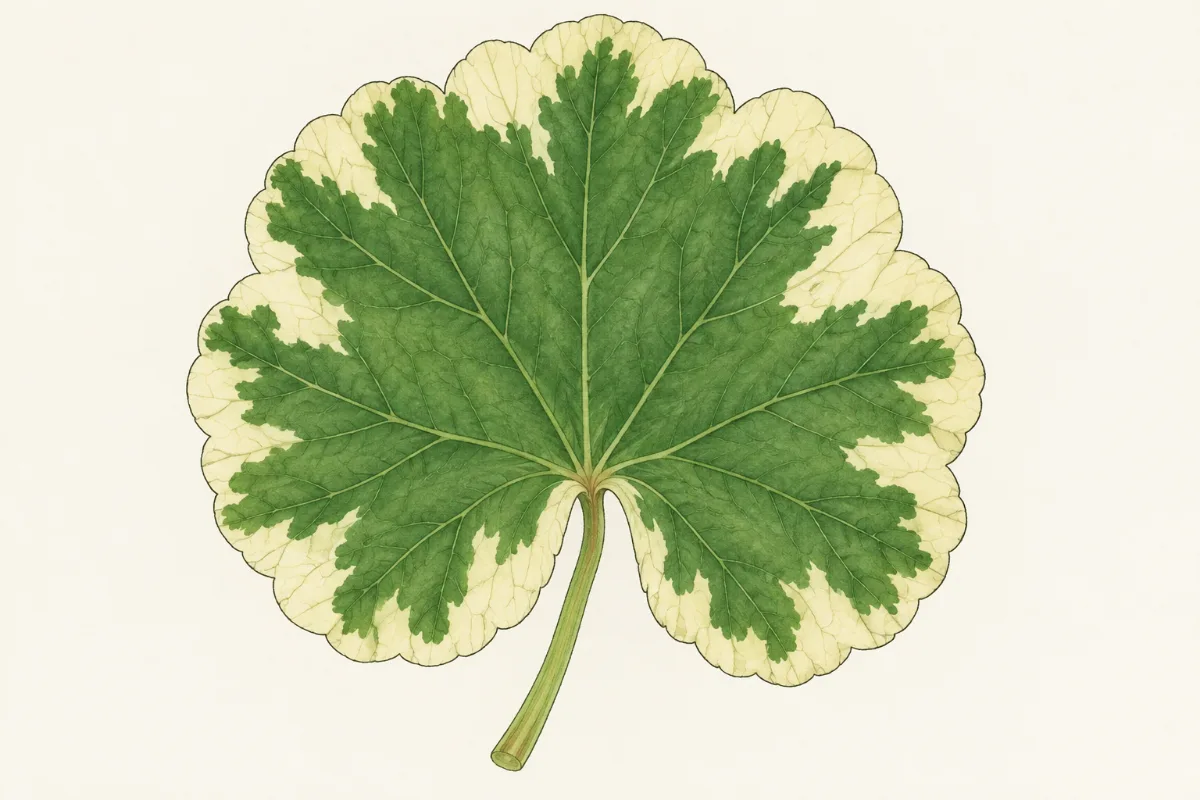
Chlorophyll. Plant B's leaves are green in the middle and cream at the edges. The cream cells have no chlorophyll. Draw or photograph the pattern before the test, because the ethanol will turn the whole leaf pale. The control is the green part of the same leaf.
 (enlarge)
Carbon dioxide. Another leaf of plant A, still on the plant, is sealed airtight in a clear plastic bag. Inside, a small dish of soda lime hangs below the leaf, not touching it. Soda lime absorbs carbon dioxide, so the air in the bag soon has almost none. The bag is clear, so light still reaches the leaf. The control is a third leaf, sealed in an identical bag with no soda lime. It has to be a bag, not an open leaf: a sealed bag also changes the air round the leaf (still and damp). With a bag on both leaves, the bag itself is no longer a difference. The one thing changed is the soda lime, which takes the carbon dioxide out. (Soda lime also dries the air a little: a limit of this test, at the end of this part.)
 (enlarge)
Then both plants stand in bright light, under a lamp, for a day. A day in good light is long enough for a leaf to build up plenty of starch. Then each leaf is picked, its cover is removed, and it is tested for starch.
Predict first: where will each leaf show starch? Write your four predictions down now. Below you can try the first step, checking that a leaf from the dark has no starch; the full experiment tests all four leaves. Then read on and compare your predictions with the results.
After the experiment: reading the results
| Leaf | What it went without | Its control | With iodine | What it shows |
|---|---|---|---|---|
| Leaves from the dark (both plants) | light, for two days | none: this is the check | orange-brown all over | no starch at the start |
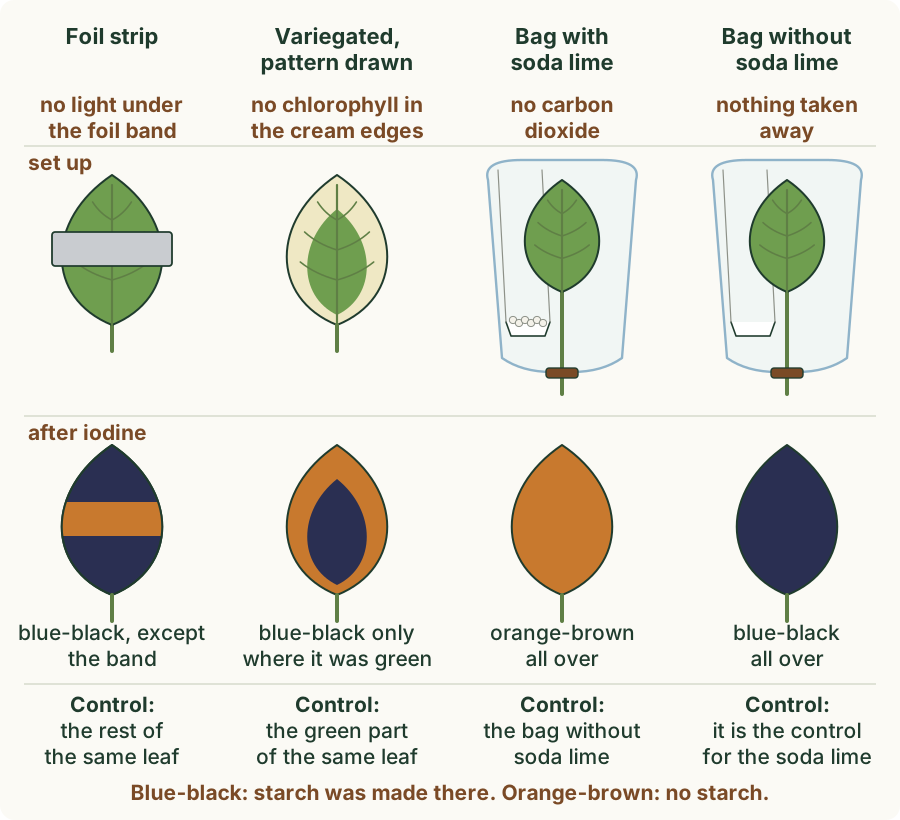
| Foil leaf | light, under the band | the rest of the same leaf | blue-black, except an orange-brown band where the foil was | light is needed |
| Variegated leaf | chlorophyll, in the cream edges | the green part of the same leaf | blue-black where it was green, orange-brown where it was cream | chlorophyll is needed |
| Bag with soda lime | carbon dioxide | the bag without soda lime | orange-brown all over | carbon dioxide is needed |
| Bag without soda lime | nothing | it is the control | blue-black all over | a sealed bag alone does not stop starch being made |
 (enlarge)
Each result is read against its control. The band under the foil made no starch, while the rest of the same leaf, in the light, did: so a leaf needs light. The cream edges made no starch, while the green middle did: so it needs chlorophyll. The leaf whose air had no carbon dioxide made no starch, while the leaf in the identical bag did: so it needs carbon dioxide (with one limit, below: the soda lime also dried the air).
Water is a raw material too, but this investigation does not test it. A leaf cannot be kept without water without wilting and its cells being damaged, so a dry leaf would fail for several reasons at once. Oxygen is not tested either: it is a product of photosynthesis, given out by the leaf, not something it takes in to make starch.
Trap: "The band under the foil had died." When the foil came off, the band was as green and firm as the rest of the leaf. It had only gone without light.
Trap: "The cream edges made no starch because they got less light." The whole leaf stood under the same lamp. The edges got the same light as the middle; what they lack is chlorophyll.
How far the evidence goes
Iodine detects starch, not photosynthesis itself. Starch is stored glucose, so a blue-black result is good evidence that the leaf photosynthesised. An orange-brown result means no starch was detected: the leaf made little or no glucose, or used it all.
Each test leaf was still attached to its plant, so sugar from the other leaves could travel into it. That sugar could be turned into starch even where no photosynthesis happened, and could give a false blue-black. A stricter design uses whole destarched plants, each in its own sealed, clear container, one with soda lime and one without. Then no other part of the plant can supply sugar.
Soda lime also absorbs water vapour, so the air in its bag was drier than in the control bag. Two things differed, not one. A fairer control bag would hold a drying substance that does not absorb carbon dioxide, so that both bags are equally dry.
Finally, one leaf is one result. Testing several leaves on several plants shows whether the result is repeatable.
Key idea: To find out whether a leaf needs something for photosynthesis, destarch the plant, take that one thing away from a leaf (or part of a leaf), keep a control that is the same in every way you can manage except that one thing, give a day in the light, then test for starch. Boiling water kills the cells and breaks their membranes, hot ethanol in a water bath removes the chlorophyll, warm water softens the leaf, and iodine solution turns blue-black where there is starch. The foil leaf shows that light is needed, the variegated leaf that chlorophyll is needed, and the soda-lime bag that carbon dioxide is needed.