Pupil sheet · Distillation
Can we get the water back? — questions
Name ______________________ Date ____________
Try every question before you use a nudge. Write in full sentences where you are asked to explain.
1. explain
Distil dilute salt water using this model. What reaches the receiver as distillate? Choose one answer, then explain how it got there.
Circle one answer.
- Liquid salt
- Liquid water
- Cooling water from the jacket
Explain the two changes of state.
Nudge (only if you are stuck): Which substance changes from liquid to gas and back to liquid?
2. identify
Fill the gaps to trace the sample through the apparatus. Keep its route separate from the cooling-water route.
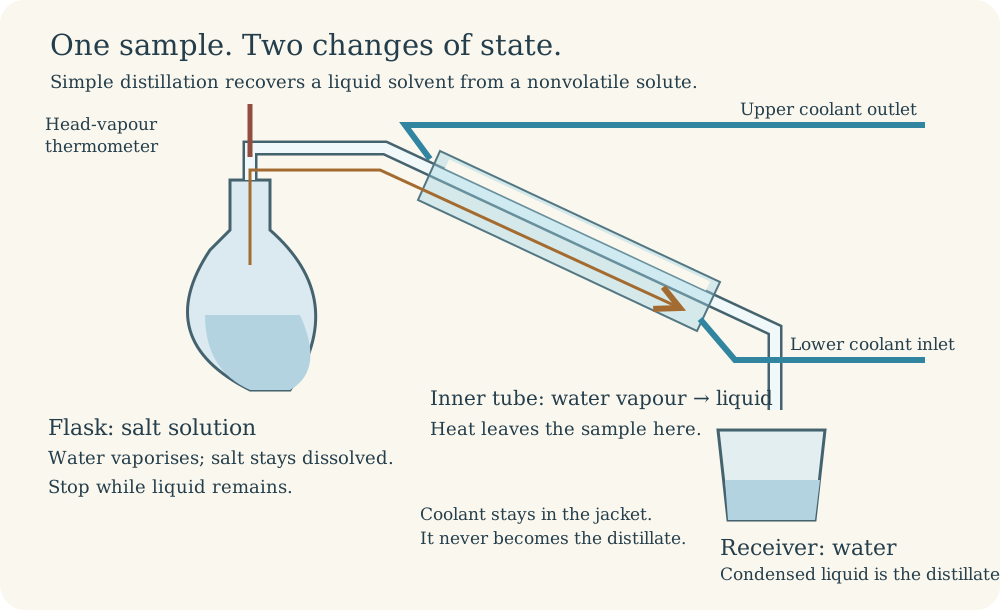
Water changes from liquid to gas by…
Gas changes to liquid by…
Cooling water stays in the…
Nudge (only if you are stuck): What happens inside the condenser tube? What stays in the outer jacket?
3. explain
Choose the correct apparatus statements. Explain one choice by connecting its position to its job.
Tick every correct statement.
- Coolant enters low and exits high
- Coolant flows into the receiver
- Receiver is open to the atmosphere
- The bulb is in the outgoing head vapour
Why does the chosen arrangement matter?
Nudge (only if you are stuck): Which arrangement fills the jacket, keeps a route to the atmosphere, or measures outgoing vapour?
4. explain
A flask starts with 120 g solution, including 6 g nonvolatile salt. It collects 20 g water with no losses. Calculate the water and salt remaining. Explain whether the solution becomes more or less concentrated.
Water and salt remaining
Reason for the concentration change
Nudge (only if you are stuck): Does 120 g describe water alone or the whole solution? Find initial water before subtracting what was collected.
5. explain
Colourless liquid R contains dissolved nonvolatile S. R is volatile under these conditions; S stays stable. You want R. Suggest a method and explain where both components end up. Describe coolant flow through the condenser without mixing it with the product.
Nudge (only if you are stuck): Which component can leave as vapour? Where must it condense, and which separate path removes heat?