Pupil sheet · Cells under the microscope
Cells under the microscope — final check
Name ______________________ Date ____________
Work alone, with the lesson closed. Answer every question; there are no hints.
1. identify / explain
The drawing shows a cell from a leaf, seen with a light microscope. (a) Name the parts labelled A, B, C and D. (b) Give two features in the drawing that show it is a plant cell and not an animal cell.
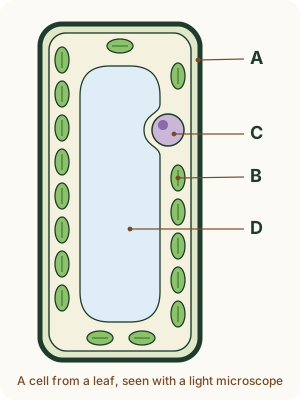
(a) A
(a) B
(a) C
(a) D
(b) Two features of a plant cell
2. identify / state
Cells taken from yoghurt are about 2 µm long. Each has a cell wall, a cell membrane, cytoplasm and ribosomes, but no nucleus. Its DNA is one loop, and there are also two tiny rings of DNA. (a) What kind of cell is this? (b) State the job of the loop of DNA. (c) State the job of the cell wall.
(a) Kind of cell
(b) Job of the loop of DNA
(c) Job of the cell wall
3. identify / explain
A neurone is a nerve cell. (a) State the job of a neurone. (b) Explain how one feature of a neurone helps it do this job. (c) The brain is made of nervous tissue, blood vessels and other tissues working together. At which level of organisation is the brain? (d) As a child grows, where do the new cells of the brain and body come from?
(a) Its job
(b) One feature and how it helps
(c) Level of the brain
(d) Where new cells come from
4. calculate
The image of a cell in a drawing is 50 mm long. The actual cell is 25 µm long. (a) Convert the actual length to millimetres. (b) Calculate the magnification of the drawing.
(a) Actual length in mm: ______________ unit ________
(b) Magnification (no unit): ______________ unit ________